Would you add a battery to a solar system?
No votes yet. Yours will be the first. · saved on this device
Loading...
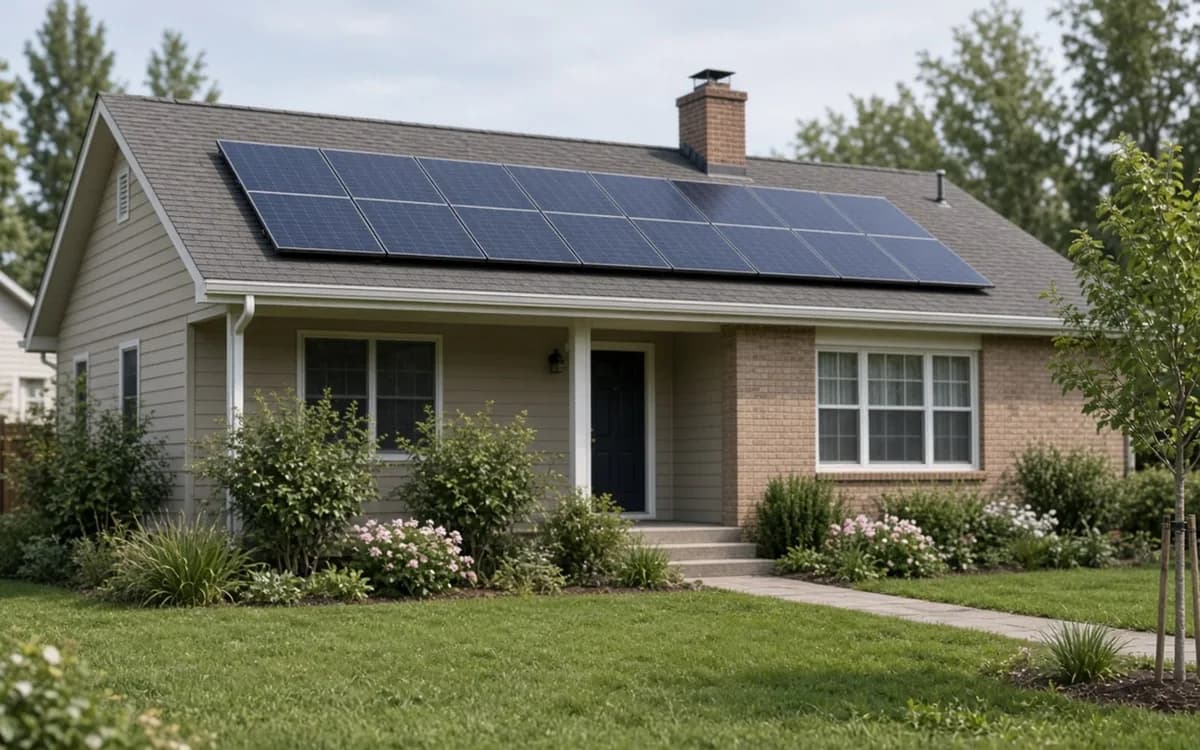
Home Energy Scope · Solar Panel Installation cost guide
Solar costs about $2.60 per watt in 2026 per EnergySage, or about $31,135 for a 12 kW system before incentives. A 6 kW system runs roughly $14,000 to $19,000. Batteries add $10,000 to $20,000, and a main panel upgrade $1,500 to $4,000. The 30% homeowner credit ended for systems placed in service after 2025, so state and utility incentives now set the net price of a purchased system.
Solar is priced by capacity, in dollars per watt, and the total depends on system size, equipment, roof complexity and electrical work. Since the federal Residential Clean Energy Credit ended for new installations after 2025, the gross price matters more than it did. This page covers per-watt costs, size tiers, equipment choices, add-ons, labor share, timeline and sample budgets.
The cost table on this page lists typical line items. For the decision to add storage, see the battery comparison, and for production and roof checks, the solar service page. Prices below assume a purchased system; leases and power purchase agreements are priced differently and are discussed in the questions at the end of the page.
| Item | Low | High | Unit | Notes |
|---|---|---|---|---|
| Solar system, installed | $2.3 | $3.2 | per watt | EnergySage 2026 average $2.60/W |
| 6 kW system | $14,000 | $19,000 | flat | |
| 12 kW system | $28,000 | $38,000 | flat | EnergySage example $31,135 |
| Battery storage | $10,000 | $20,000 | flat | By capacity and backup scope |
| Main panel upgrade | $1,500 | $4,000 | flat | HEAR rebate up to $4,000 where launched |
| Panel removal and reinstall for roofing | $2,000 | $5,000 | flat | |
| String inverter replacement (year 10–15) | $1,500 | $3,000 | flat |
EnergySage's 2026 average is $2.60/W, with most quotes between about $2.30 and $3.20 per watt. Multiply by system size in watts to estimate the total. The site's cost table shows a 6 kW system at roughly $14,000 to $19,000 and a 12 kW system at $28,000 to $38,000, with EnergySage's 12 kW example at $31,135. Most homes fall between these two sizes.
Larger systems usually cost less per watt, because permitting, design and interconnection costs are spread over more capacity. Small systems on complex roofs cost the most per watt. Size the system to post-retrofit usage: a house that has been sealed and insulated, or that will add a heat pump or electric vehicle, has a different load than today's bills show. Lighting is mostly handled already: our analysis of the EIA's 2024 household survey found 74.8% of homes use LEDs for at least half of indoor bulbs, so the larger reductions come from the envelope.
The size table in this section multiplies EnergySage's national average of $2.60 per watt by common system sizes, before incentives. EnergySage's own 12 kW figure is $31,135 because its average is not exactly $2.60. Small systems usually land above the 4 kW line and large ones below the 12 kW line; for your state's per-watt average, EnergySage publishes state pages (Arizona is lowest at $2.27 per watt), and those beat any national multiple. Regional value differences are on the locations page.
| System size | Cost at $2.60/W (EnergySage national average, before incentives) |
|---|---|
| 4 kW | About $10,400 |
| 6 kW | About $15,600 |
| 8 kW | About $20,800 |
| 10 kW | About $26,000 |
| 12 kW | About $31,200 (EnergySage lists $31,135) |
EnergySage notes that panels are only about 12% of the installed price. The rest is inverters, racking, wiring, labor, permitting, interconnection, design and the installer's overhead and margin. That is why panel brand has less effect on price than homeowners expect, and why installer efficiency and local permitting speed matter so much.
Labor and soft costs vary by region and by installer size. Local installers and national companies can differ widely in pricing, and financing arrangements can add costs that are not visible in a cash price. Ask for a cash price even if you plan to finance, so you can compare the financing cost separately.

Batteries are the largest add-on at $10,000 to $20,000 by capacity and backup scope. Main panel upgrades, needed when the existing panel lacks capacity, run $1,500 to $4,000, and DOE's HEAR program lists item caps of $8,000 heat pump / $1,600 insulation, including up to $4,000 for a panel where launched. Roof repair or replacement before installation can be the largest hidden cost; if the roof needs replacing within ten years, doing it first avoids paying $2,000 to $5,000 later to remove and reinstall the panels.
Through 2025, the IRS Residential Clean Energy Credit covered 30% of solar and battery costs. On a $31,135 system, that credit was worth over $9,000. It ended for property placed in service after December 31, 2025, so a 2026 system carries its full price unless state, local or utility programs apply. Budget accordingly.
Remaining incentives vary widely: some states offer rebates or performance payments, some utilities pay for battery participation in grid programs, and some states exempt solar from property or sales tax. Payback projections for a purchased system that still include a 30% federal credit are outdated. The National Association of Realtors found 47% of agents cite incentives as the top driver of green home demand, which shows how much the credit mattered.
Leases, power purchase agreements and prepaid third-party-owned systems are treated differently. The owner of those panels is a business, and it may claim the commercial Section 48E credit, 30% of eligible cost before bonus adders, per the IRS. IRS Notice 2025-42 cuts that credit off for solar placed in service after December 31, 2027, unless construction began by July 4, 2026. Solar.com describes the credit reaching homeowners as a lower lease payment, a lower PPA rate or a smaller prepayment. Ask each lease or PPA bidder in writing how much of the credit is passed through, then compare the 25-year contract total with a cash or loan purchase.
Installation itself usually takes one to three days, but the full timeline from signing to permission to operate often runs one to three months, driven by design, permitting and utility interconnection. The system cannot legally export power until the utility approves it, so a long approval delays savings. Ask each installer for their recent timeline in your area.
Delays can also affect cost when equipment prices change or when a utility changes its export rules before your system is approved. Some utilities grandfather systems under the rules in effect when the application was filed. Ask how your installer handles price changes and whether your interconnection application date affects your rate plan. Timing is a common lever: Angi's 2025 Home Spending Pulse found 23% of homeowners who hired a pro started early to get ahead of price rises.
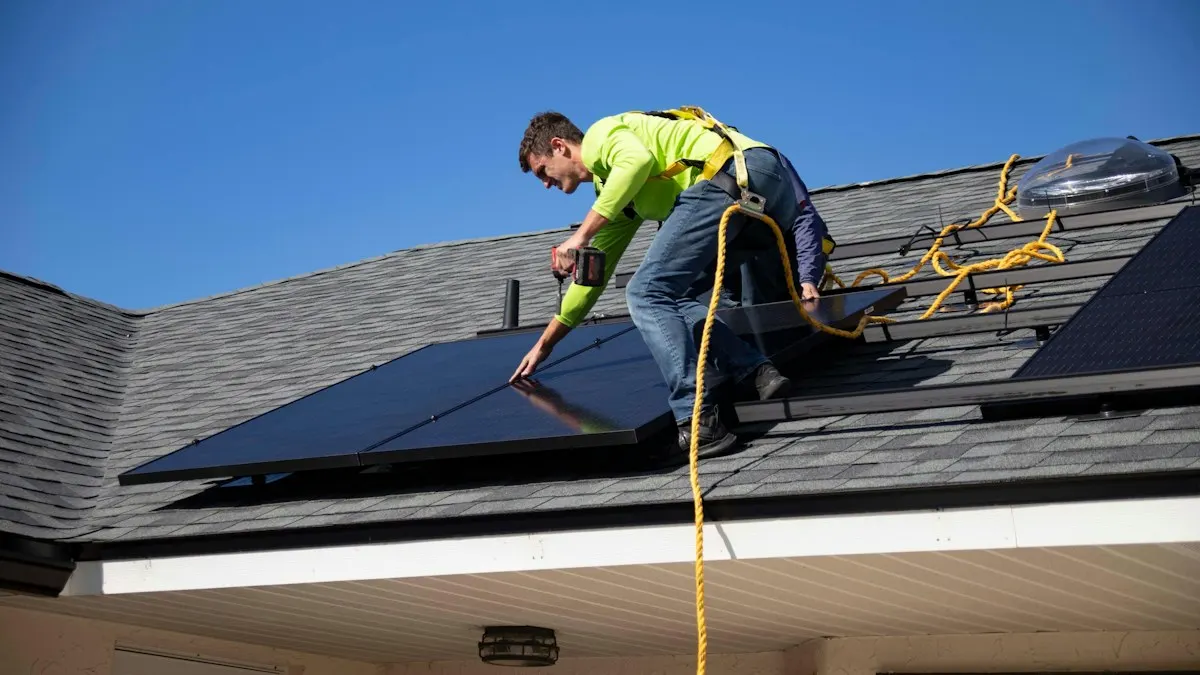
Reduce the system size to match post-retrofit usage rather than oversizing. Choose standard panels over premium high-efficiency models unless roof space is limited. Consider a string inverter with a plan for replacement if the roof has no shading, or skip the battery in areas with full net metering and reliable grid power.
Do not cut roof preparation, proper electrical work, permits, or a production estimate based on your roof and local weather data. Keep a clear warranty for workmanship as well as equipment. The permits guide explains the inspections a system must pass. Skipping any of these to save money tends to delay permission to operate.
These examples use EnergySage's average cost per watt and the site's cost table, before any incentives. Use the retrofit cost guide for context, and request local quotes through the estimate request. Figures exclude roof replacement, structural work and any state or utility incentive, and assume a purchased system with standard panels and equipment.
| Scope | Details | Estimated budget |
|---|---|---|
| 6 kW, solar only | Simple roof, existing panel adequate | About $14,000 to $19,000 |
| 12 kW, solar only | Panel upgrade included | About $30,000 to $42,000 |
| 12 kW with battery | Panel upgrade, one battery | About $40,000 to $60,000 |
The cost per watt varies less across the country than the value of each watt. Two identical systems at the same price can produce very different savings because of sunlight hours, roof orientation, shading and, above all, the utility's export rules and rates. A system in a sunny state with high electricity rates and fair export credits pays back much faster than the same system in a cloudy area with low rates, even though the installed cost is similar.
Utility rules are the variable most likely to change during the life of the system. Where full retail net metering has been replaced with lower export credits, the value of each exported kilowatt-hour drops, and sizing the system closer to on-site use, or adding storage, becomes more important. Ask each installer which rate plan and export rule they used in the savings estimate, and whether your application date locks in current rules.
Local permitting and interconnection practices also affect cost. Jurisdictions with fast, standardized permitting keep soft costs down, while slow or complex processes add labor and delay. Installers who work regularly in your area know these costs and should include them in the quote. Comparing several local installers is the most reliable way to see where your market sits against EnergySage's national average.
By the numbers
Planning figures from published U.S. sources; every card links to where the number came from.
$2.60/W
average solar cost per watt; $31,135 for a 12 kW system before incentives
EnergySage reports an average payback of about 10 years and 25-year savings of $41,000–$155,000 depending on local rates. Panels are only about 12% of the price; labor, inverters and soft costs dominate.
EnergySage, Solar Panel Cost (2026)30%
Residential Clean Energy Credit, ended for property placed in service after Dec 31, 2025
IRS guidance states the credit is not available for solar, battery or geothermal property placed in service after December 31, 2025. Solar economics in 2026 must be evaluated without the federal credit.
IRS, Residential Clean Energy Credit (2026)+18%
growth in for-sale listings mentioning solar panels, 2024 vs 2023; batteries +62%
Zillow's 2025 trends report tracked keyword growth in millions of 2024 listings. Batteries were the fastest-growing feature, and EV chargers rose 34%.
Zillow 2025 Home Trends (2024)47%
of Realtors say tax credits and rebates are the top driver of green home demand (2025)
NAR's 2025 Residential Sustainability Report also found 31% cite higher resale value and 30% cite awareness of energy savings; 42% of agents worked with a property featuring green elements in the past year.
National Association of Realtors, 2025 Residential Sustainability Report (2025)The calculator uses the same home energy improvements benchmarks as this guide. Set the size and tier, then request a written estimate to check it against a real proposal.
Homeowner polls
No votes yet. Yours will be the first. · saved on this device
No votes yet. Yours will be the first. · saved on this device
Fixed costs such as design, permitting, interconnection, travel and equipment setup are spread over fewer watts on a small system. A 4 kW system has nearly the same paperwork as a 12 kW system. That is why installers may quote a noticeably higher per-watt price for small arrays and why sizing matters.
Usually, because each panel gets its own inverter. Microinverters handle shading better, allow panel-level monitoring and often carry longer warranties, which can offset the string inverter replacement listed at $1,500 to $3,000 around year ten to fifteen. On an unshaded roof, a string inverter is often the lower-cost choice.
A lease or PPA has little or no upfront cost, and you pay a monthly amount or a per-kilowatt-hour rate. The homeowner credit (25D) ended, but a leasing company or PPA provider may still claim the commercial 48E credit on systems it owns, 30% of eligible cost before adders, through 2027. Ask each bidder in writing how much of that is passed through in the rate. Total payments can still exceed a cash purchase, and the buyer of your house must assume the contract, so compare 25-year totals.
Ground mounts avoid roof penetrations and allow ideal orientation, but they add racking, foundations and trenching, which usually raises cost per watt. They make sense when the roof is shaded, poorly oriented or near the end of its life, and when there is open land. The site does not have a sourced ground-mount range.
Solar panels need little maintenance: occasional cleaning in dusty areas, inspection after severe weather and monitoring for production drops. The main scheduled cost is inverter replacement for string systems. Budget for a roof penetration inspection if the roof ages, and check whether workmanship warranties cover leaks.
It depends on your state. Many states exempt solar from property tax assessments, while others do not. Check your state's rules or ask your county assessor before signing. This is one of the incentives that remains after the federal credit ended, and it can affect the net cost over the system's life.
Evidence is mixed. Zillow reported +18% growth in listings mentioning solar, but the National Association of Realtors found many agents struggle to value it. Owned systems with documentation generally add more value than leased systems. Plan solar around your own savings rather than resale.
 Home Energy Audits · Cost guideHome energy audit cost in 2026: what each tier and test adds
A home energy audit costs about $212 to $698 in 2026, with Angi and HomeAdvisor both putting the average near $437.
 Insulation & Air Sealing · Cost guideInsulation and air sealing cost in 2026, per square foot and per project
Attic insulation averages about $2,100 in 2026 per HomeAdvisor, with a typical range of $1,700 to $2,500.
 Window & Door Replacement · Cost guideWindow and door replacement cost in 2026, per opening and for the whole house
Window replacement averages about $800 per window in 2026 per Fixr, typically $450 to $1,200, and a whole-home project averages $7,347 per HomeAdvisor, ranging from $3,436 to $11,837.
 Service guideSolar Panel Installation
Solar panel installation covers the roof and shading assessment, equipment selection, electrical and structural permits, utility interconnection and the production and financial assumptions in the proposal.
Service guideHome Energy AuditsA home energy audit connects comfort complaints and utility bills to the measured condition of the house through a blower door test, thermal imaging, duct leakage testing and combustion-safety checks, then delivers written, prioritized recommendations.
Service guideInsulation & Air SealingAir sealing closes the gaps that move air through the attic plane, rim joist and penetrations; insulation slows heat conduction through the assemblies around them.
 Free toolEnergy audit cost calculator: size the assessment before the retrofit
Size, material tier and complexity in, a realistic budget range out.
 Free toolEnergy retrofit comparisons: the five decisions inside a retrofit
Side-by-side tables for the decisions that change the price most.
 Free toolEnergy retrofit readiness quiz: do you know the sequence and the tests?
10 questions that show what you already know and what to check next.
 Free toolEnergy retrofit polls: how other homeowners weighed the same decisions
See what other planners chose and add your vote.
Tell us the size, the condition of what is there now, and what you want to change. Home Energy Scope passes your request to independent local professionals, who reply with written, no-obligation estimates. The service is free to use.