Which would you do first?
EPA estimates sealing and insulating saves about 15% of heating and cooling costs.
No votes yet. Yours will be the first. · saved on this device
Loading...
Home Energy Scope · Free tools
Four tools help you plan before requesting estimates: an assessment cost calculator anchored to Angi's 2026 benchmark, comparison guides for the choices inside each scope, a quiz on sequencing and diagnostics, and polls showing what other homeowners prioritized. None replaces a blower door test; each makes the visit and the proposals easier to judge.
 Free toolEnergy audit cost calculator: size the assessment before the retrofit
Size, material tier and complexity in, a realistic budget range out.
 Free toolEnergy retrofit comparisons: the five decisions inside a retrofit
Side-by-side tables for the decisions that change the price most.
 Free toolEnergy retrofit readiness quiz: do you know the sequence and the tests?
10 questions that show what you already know and what to check next.
 Free toolEnergy retrofit polls: how other homeowners weighed the same decisions
See what other planners chose and add your vote.
By the numbers
$437
average home energy assessment cost, typical range $212–$698 (Angi, 2026)
Angi's cost guide, updated April 2026, prices the assessment only. It does not include insulation, windows, solar or a whole-house retrofit; ask which diagnostic tests are included.
Angi, How Much Does an Energy Audit Cost (2026)$685/yr
savings from acting on energy audit recommendations, per Pearl citing Angi
Pearl's 2026 audit statistics put the payback on a $437 audit at roughly seven months, and report a professional audit finds about 35 problems versus 12 for a DIY check.
Pearl Certification, Home Energy Audit Cost 2026 Statistics (2026)9 in 10
U.S. homes are under-insulated, per ENERGY STAR
EPA's seal-and-insulate guidance says most existing homes fall short of recommended insulation levels, which is why attic top-ups are the most common first retrofit.
ENERGY STAR, Why Seal and Insulate (2025)15%
average heating and cooling savings from air sealing plus attic, floor and basement insulation
EPA estimates 15% on heating and cooling costs, or 11% of total energy costs, from sealing leaks and insulating attics, crawlspace floors and basements. It is the benchmark for envelope retrofits.
ENERGY STAR, Why Seal and Insulate (2025)Most homeowners start a retrofit with a product in mind and no diagnosis. The tools here reverse that. Angi's 2026 benchmark puts a professional assessment at $437 on average, and Pearl's statistics report about $685/yr a year saved by acting on the findings, which is the arithmetic that makes the calculator the place to begin.
Use them in sequence: quiz to find what you have not settled, comparisons to weigh the choices inside each scope, calculator to size the assessment, polls to see how others sequenced their work. Then take the results to the contact page.
The calculator answers 'what will an assessment cost' by home size, diagnostic scope and complexity, with add-ons for duct testing, thermal imaging, combustion safety and a test-out. The comparison guides answer 'which of these two' for insulation versus windows, blown-in versus spray foam, vinyl versus wood frames, solar with or without a battery, and walk-through versus diagnostic audit. The quiz answers 'do I know the sequence and the tests', and the polls answer 'what did others decide'.
Each tool cites the same statistics used across the site: EPA's 15% sealing and insulation saving, our analysis of the EIA's 2024 household survey showing 13.8% of homes drafty most or all of the time, HomeAdvisor's 2026 material costs, Zonda's 2025 resale figures, EnergySage's 2026 solar pricing, and the IRS end dates for the federal credits. Where a figure is regional or a survey sample, the tool says so.
Enter conditioned floor area, not lot size. Pick the diagnostic scope that matches your symptoms: a walk-through for a single visible problem, a standard audit with blower door for most homes, a comprehensive audit with duct and combustion testing for homes with gas appliances and attic ducts. Choose complexity by the house: single story with one system is simple; multiple systems, additions, and both a crawlspace and an attic are involved.
The result prices the assessment only. Insulation, windows, solar and equipment are quoted per house by the pros you hear from, and the service pages carry the published ranges for each. Use the calculator to decide which audit tier to request and to recognize a quote far outside the range.
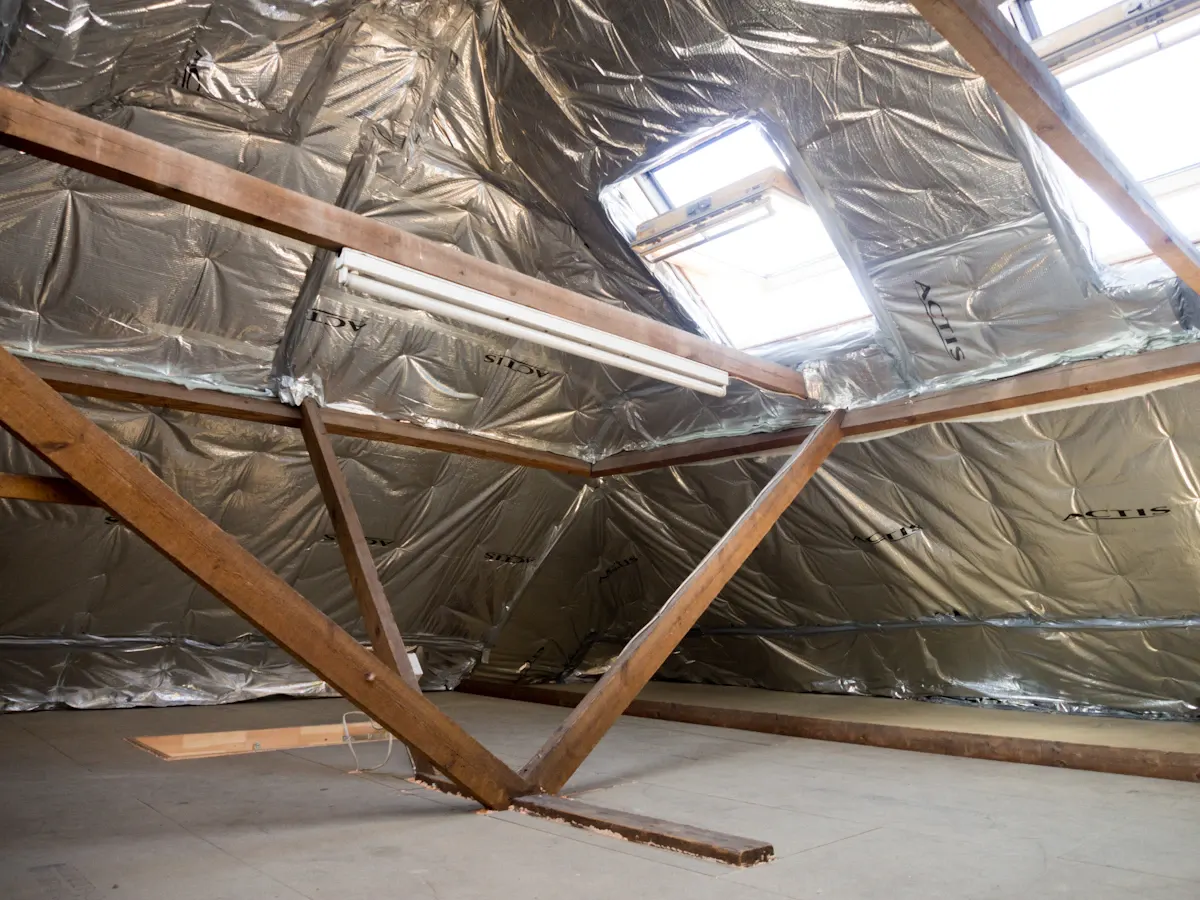
Each pair shows upfront cost, lifespan, maintenance, appearance, climate fit, install time, resale and best-for in one table, then a verdict stating when each side wins. The verdicts are conditional. Insulation wins on payback; windows win when the opening has failed, which matters because our count of EIA 2024 data finds 62.4% of homes still have mostly original windows. Blown-in wins on a flat attic; spray foam wins at the rim joist. The right answer depends on the house, and the tables make that visible.
The quiz has ten questions on sequence, diagnostics, materials, incentives and solar assumptions, each explained with a sourced figure. Missing one is the point: it becomes a question for the pro. The polls collect visitor opinion and are labeled as such, unlike a published survey such as Houzz's 2026 study, which found 50% of its homeowners planned to renovate in 2026. RESNET's count of 436,798 homes scored on the HERS Index in 2024 is data, and so is ENERGY STAR's estimate that 9 in 10 homes are under-insulated; a poll on which insulation people plan first is a snapshot.
Homeowner polls
EPA estimates sealing and insulating saves about 15% of heating and cooling costs.
No votes yet. Yours will be the first. · saved on this device
No votes yet. Yours will be the first. · saved on this device
Because the assessment is the one step every retrofit shares and the one with a stable national benchmark: Angi's $437 average within $212 to $698. Insulation, windows, solar and equipment vary too much by house to estimate from a form; the service pages give published ranges, and the pros you hear from quote the work after seeing the house.
Yes, particularly the solar comparison and the quiz's questions on production assumptions and sequencing. The calculator still applies, because an assessment before solar often shrinks the system you need, and at $2.60 per watt a 15% smaller system on a 10 kW project saves about $4,000 before any panel is installed.
From published cost and savings figures and from how each technology behaves: EPA and DOE savings estimates, HomeAdvisor and Fixr costs, Zonda resale data, EnergySage solar economics, and building science on air barriers and ventilation. Verdicts are conditional on the house rather than declaring a winner.
Note the inputs and the range and paste them into your request; that tells auditors which tier you expect. The calculator stores no personal data. A screenshot with the assumptions is enough for a conversation with a bidder.
No, and they say so. For representative figures use the sourced statistics from the EIA, EPA, DOE and the cost guides, which have stated samples and denominators.
It tests whether you know the general sequence and the exceptions, then points to the service pages. Your house's actual first step comes from the audit. The quiz's value is making sure you ask the auditor the right questions and can judge the report when it arrives.
When the sources publish new figures. Angi's benchmark was updated April 2026, HomeAdvisor's guides June 2026, EnergySage's data June 2026. Incentive references reflect the IRS end date of December 31, 2025 for the federal credits and DOE's rolling state launches for HEAR and HOMES. Each tool lists its assumptions with the source year.
 Service guideHome Energy Audits
A home energy audit connects comfort complaints and utility bills to the measured condition of the house through a blower door test, thermal imaging, duct leakage testing and combustion-safety checks, then delivers written, prioritized recommendations.
 Service guideInsulation & Air Sealing
Air sealing closes the gaps that move air through the attic plane, rim joist and penetrations; insulation slows heat conduction through the assemblies around them.
 Service guideWindow & Door Replacement
Window and door replacement addresses openings with a defined problem: damage, failed seals, poor operation, drafts, single-pane glass in a cold climate, or a door that leaks and does not latch.
 Service guideSolar Panel Installation
Solar panel installation covers the roof and shading assessment, equipment selection, electrical and structural permits, utility interconnection and the production and financial assumptions in the proposal.
Tell us the size, the condition of what is there now, and what you want to change. Home Energy Scope passes your request to independent local professionals, who reply with written, no-obligation estimates. The service is free to use.