Where would you insulate first?
The EIA found 47.6% of homes have an attic and 85.6% of those attics are unfinished.
No votes yet. Yours will be the first. · saved on this device
Loading...
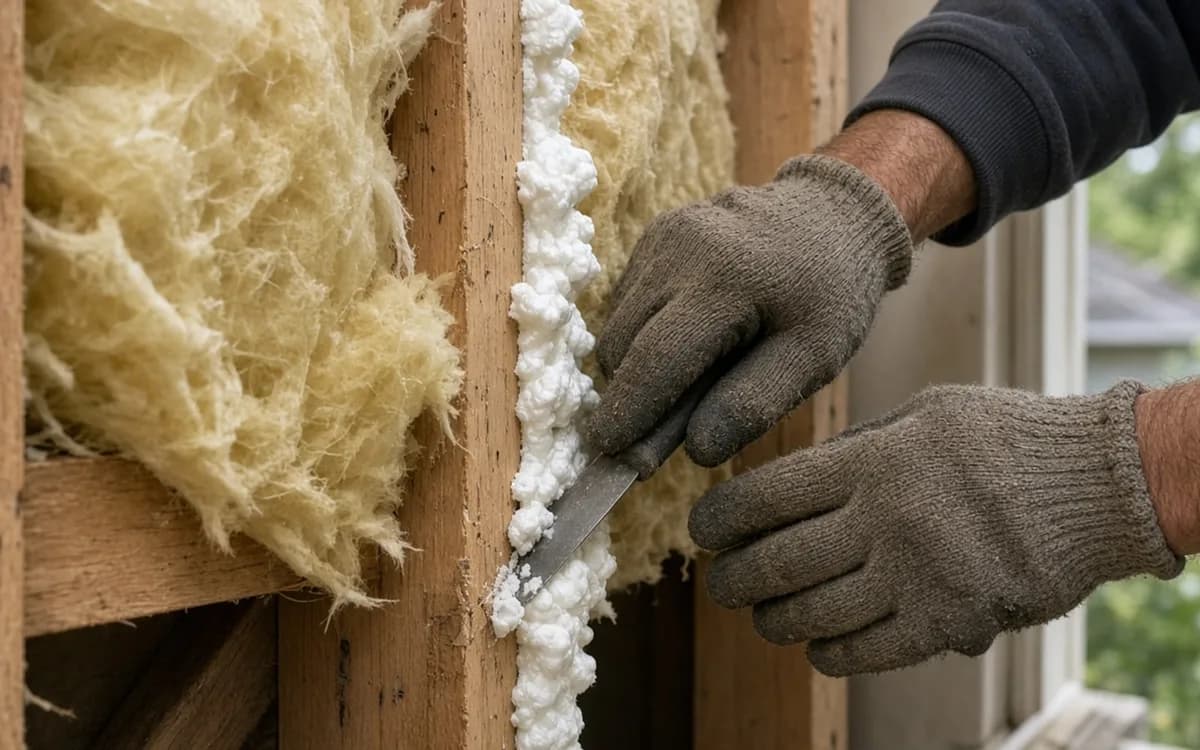
Home Energy Scope · Service guide
Air sealing closes the gaps that move air through the attic plane, rim joist and penetrations; insulation slows heat conduction through the assemblies around them. Together they are the retrofit with the clearest payback, saving about 15% of heating and cooling costs by EPA's estimate. This service suits homes where an assessment shows leakage or insulation below recommended levels, coordinated with ventilation and combustion-safety checks.
Most American houses have both problems. ENERGY STAR says 9 in 10 homes are under-insulated, and Pearl's registry analysis puts air leakage problems in about 90% of them. The EIA's 2024 survey adds that households describe 17.6% of homes as poorly insulated and 2.6% as uninsulated. The good news is that the attic, where most of the loss happens, is accessible in the majority of houses.
The order matters more than the material. Sealing before insulating stops the air that would otherwise pass through loose-fill insulation as if it were a filter. Checking combustion safety before and after prevents a tighter house from pulling exhaust back down a water heater flue. And a blower door test at the end proves the work did what the proposal said. This page covers materials, costs, sequence, ventilation and how to compare bids from matched local contractors.
Want the numbers only? Read the insulation & air sealing cost guide for 2026 ranges, what moves the price, and sample budgets.
| Item | Low | High | Unit | Notes |
|---|---|---|---|---|
| Attic insulation, installed | $1,700 | $2,500 | flat | HomeAdvisor 2026, avg $2,100 |
| Blown-in insulation project | $987 | $2,334 | flat | HomeAdvisor 2026, avg $1,661 |
| Spray foam project | $1,455 | $4,337 | flat | HomeAdvisor 2026, avg $2,888; attics up to $9,000 |
| Insulation material | $1 | $5 | per sq ft | By material |
| Installation labor | $1.5 | $3 | per sq ft | HomeAdvisor |
| Attic air sealing | $300 | $1,500 | flat | Top plates, penetrations, hatch |
| Rim joist spray foam | $500 | $2,000 | flat | |
| Blower door test-out | $150 | $450 | flat | Fixr |
Any home whose audit shows a blower door number well above a reasonable target, insulation below recommended levels, or thermal images with cold streaks at the ceiling edge. The typical candidate is older, with loose fill or batts below recommended depth and an uninsulated rim joist; our analysis of EIA 2024 data puts frequent draftiness at 12.3% of owner-occupied homes built before 1990 against 5.8% of newer ones, a 6.5 pts gap. By the same count, 47.6% of homes have an attic and 85.6% of those attics are unfinished, which is the easy case.
It solves the stack effect: warm air rising out through the top of the house and pulling cold air in at the bottom. That is why the attic plane and the basement rim joist come first, and why caulking windows on the main floor does little. If the audit shows the house is already tight, the money belongs in ducts, equipment or glass instead.
For an open attic top-up, blown-in fiberglass or cellulose is the standard. HomeAdvisor's June 2026 guide puts blown-in at $1,661, with fiberglass material at $0.50 to $1.10 per square foot versus $2.00 to $2.30 for dense-pack cellulose. Cellulose packs tighter and resists air movement better; fiberglass is lighter and cheaper. Batts suit accessible joist bays and knee walls but leave gaps when cut around obstacles.
Spray foam seals and insulates in one step, which makes it the choice for rim joists, cathedral ceilings and irregular cavities. HomeAdvisor's average is $2,888, with open-cell at $0.60 to $1.60 and closed-cell at $1.30 to $3.10 per board foot. It is overkill for a flat attic that only needs depth. Read the blown-in versus spray foam comparison for the full trade-off, including the ventilation consequences of foaming a roof deck.
| Material | Typical use | Cost (HomeAdvisor 2026) | Notes |
|---|---|---|---|
| Blown-in fiberglass | Open attic top-up | $0.50–$1.10/sq ft material | Light, cheap, needs air sealing beneath |
| Dense-pack cellulose | Attics, closed wall cavities | $2.00–$2.30/sq ft material | Resists air flow, settles slightly |
| Fiberglass batts | Accessible joist bays, knee walls | $300–$1,500 per project | Gaps if cut poorly |
| Open-cell spray foam | Irregular cavities, sound | $0.60–$1.60/board ft | Vapor permeable |
| Closed-cell spray foam | Rim joists, roof decks, crawlspaces | $1.30–$3.10/board ft | Air and vapor barrier; higher R per inch |
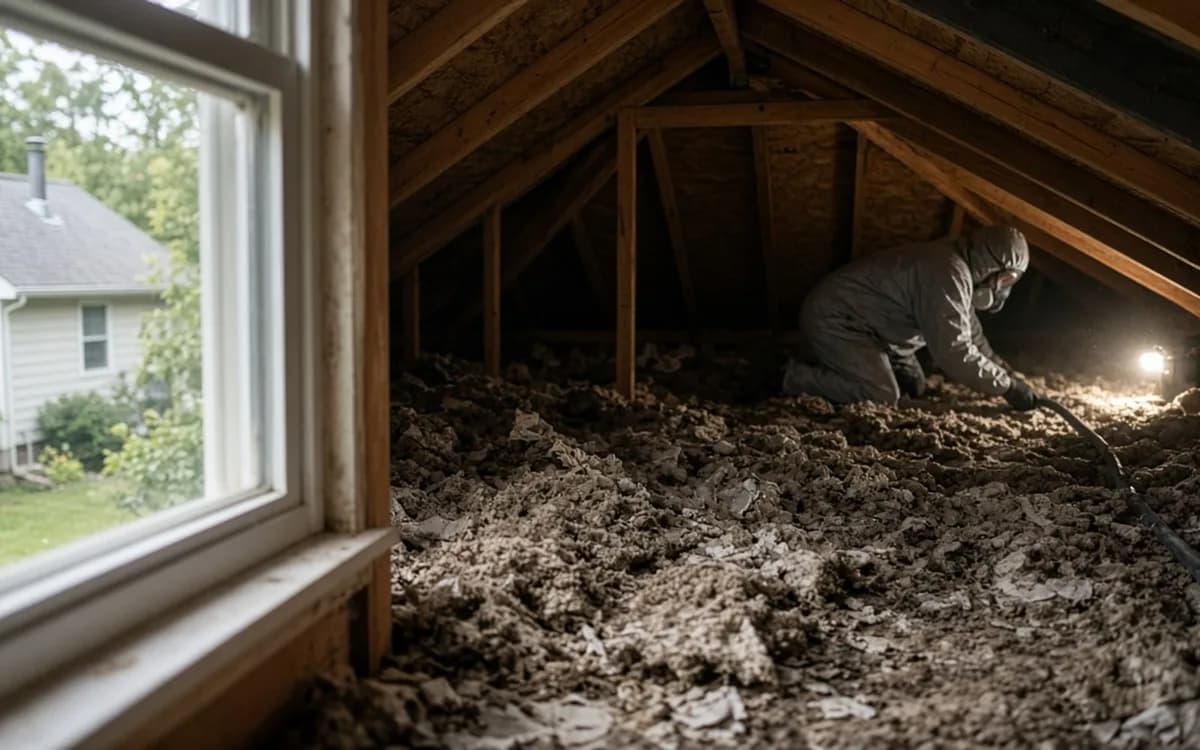
HomeAdvisor's June 2026 attic insulation average is $2,100, with $1 to $5 per square foot by material and labor at $1.50 to $3 per square foot on top. Air sealing the attic plane, with foam and caulk around top plates, penetrations, recessed lights and the hatch, typically adds $300 to $1,500 depending on complexity. A rim joist with closed-cell foam runs $500 to $2,000. Wall insulation by dense-pack from outside or inside is the expensive case at $2 to $5 per square foot of wall.
Savings are well documented. EPA's estimate of 15% on heating and cooling covers sealing plus attic, crawlspace and basement insulation. DOE's Weatherization Assistance Program reports $372/yr average savings from its fuller package. On a $2,100 attic job that is a three- to ten-year payback depending on the starting condition and fuel prices. The calculator covers the assessment; ask contractors for square-foot pricing on the work itself.
The federal 25C credit allowed 30% of insulation and air sealing material costs within a $1,200 annual cap through property placed in service by December 31, 2025. Rewiring America confirms the credit expired on that date, and work installed in 2026 does not qualify. In its place, DOE's HEAR program offers up to $1,600 for insulation, air sealing and ventilation in launched states, with households under 80% of area median income eligible for up to 100% of cost and 80 to 150% AMI up to 50%, per Trane's summary of the program rules. The HOMES program offers up to $8,000 for whole-home retrofits modeled at 20% savings.
Utility rebates remain common and often stack, and they matter more when budgets are tight: the DOE's Home Electrification and Appliance Rebates reach up to $14,000 per household in states that have launched them. Ask the contractor which programs they are enrolled in, since many rebates require a participating contractor and a pre-approval before work begins. Get eligibility in writing for your address and installation date; a rebate counted before it is confirmed is a discount that may never arrive.
Day one is preparation and sealing: clearing the attic, addressing any moisture or wiring issues found in the audit, building dams around the hatch and recessed lights, sealing top plates and penetrations with foam and caulk, and installing baffles at the eaves to keep soffit vents open. Day two is insulation, blown to the target depth with rulers installed so the depth can be verified. A rim joist is foamed the same day. A blower door test-out follows, and the numbers go in the closeout.
Ventilation is part of the job, not an afterthought. Bath fans and range hoods must exhaust outside, not into the attic. Attic ventilation must stay open after insulation. If the test-out shows the house is now tight enough to need mechanical ventilation, the contractor should say so and quote it. Combustion appliances are re-tested after sealing. A two-day job for most attics; longer for walls or crawlspaces.
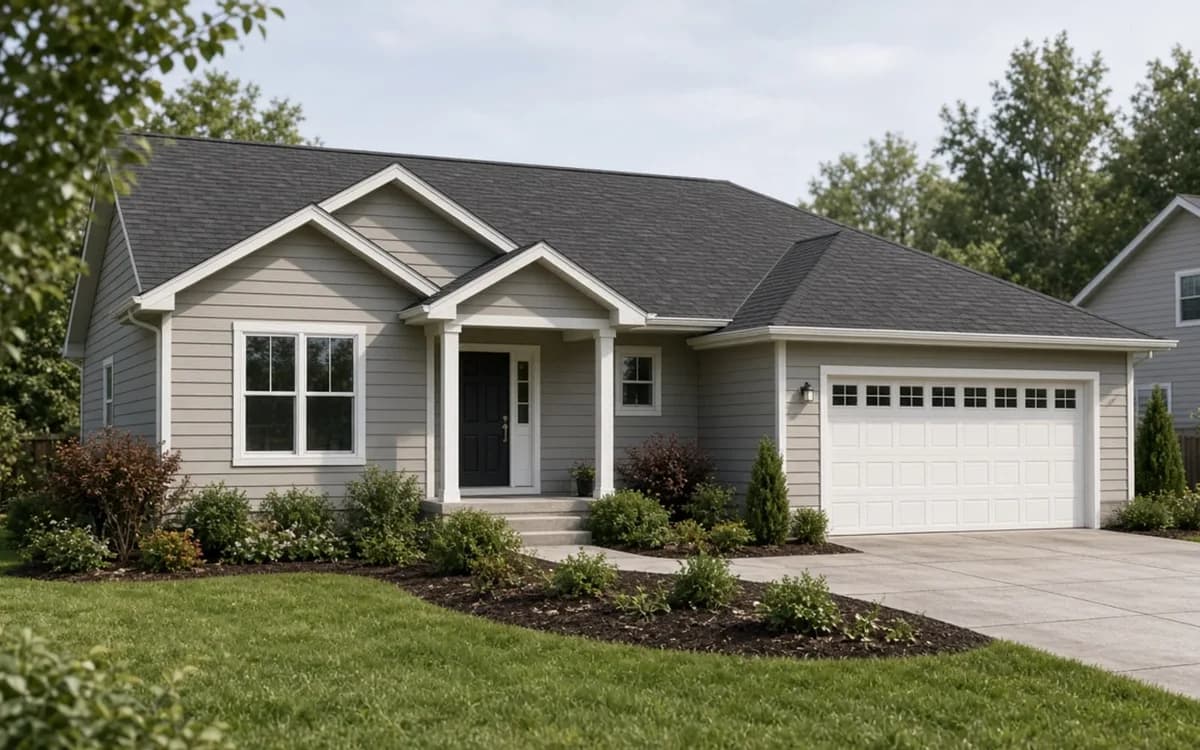
Insulating over unsealed top plates, so the stack effect continues under the new blanket. Burying recessed lights not rated for insulation contact. Covering knob-and-tube wiring. Blocking soffit vents. Sealing a house with a naturally drafting water heater without testing it afterward. Foaming a roof deck without a plan for the now-unvented attic. Each is common because it is invisible once the insulation is in, which is why the audit report and the test-out are the homeowner's protection.
Cold climates want the highest attic R-values, careful attention to ice dam paths, and a sealed rim joist; the EIA found the Northeast has the highest share of homes described as poorly insulated at 20.6%. Hot-humid climates want attic ventilation preserved, radiant barriers considered, and ducts sealed or brought inside the envelope, since the South has the most attics at 55.3% of homes. Dry western climates focus on cooling loads. Check the locations page for more.
Ask for the air-sealing scope in detail, the material and target R-value by area, the square footage, whether eave baffles and hatch insulation are included, how combustion safety and ventilation are handled, whether a blower door test-out is included, and which rebates the contractor is enrolled in. A proposal that lists only 'R-49 blown attic' with no sealing line is half a job. Compare against the audit findings, and bring the comparison table on materials.
Home Energy Scope ran these numbers on the federal government's own household data. You won't find them in a contractor's brochure.
Home Energy Scope analysis · 2024
95% interval 11.3%–13.3% · about 6.6 million homes · 7,124 survey households
95% interval 5.0%–6.6% · about 2.1 million homes · 4,841 survey households
Difference: 6.5 percentage points (95% interval 5.4 to 7.6).
Homes built before 1990 report frequent drafts about twice as often as newer ones. Air sealing is usually the cheapest first fix in an older house, before windows or new equipment.
Source: Home Energy Scope analysis of 2024 federal household survey data from the U.S. Energy Information Administration. How we calculated it
Homeowner polls
The EIA found 47.6% of homes have an attic and 85.6% of those attics are unfinished.
No votes yet. Yours will be the first. · saved on this device
No votes yet. Yours will be the first. · saved on this device
No votes yet. Yours will be the first. · saved on this device
 Service guideHome Energy Audits
A home energy audit connects comfort complaints and utility bills to the measured condition of the house through a blower door test, thermal imaging, duct leakage testing and combustion-safety checks, then delivers written, prioritized recommendations.
 Service guideWindow & Door Replacement
Window and door replacement addresses openings with a defined problem: damage, failed seals, poor operation, drafts, single-pane glass in a cold climate, or a door that leaks and does not latch.
 Service guideSolar Panel Installation
Solar panel installation covers the roof and shading assessment, equipment selection, electrical and structural permits, utility interconnection and the production and financial assumptions in the proposal.
It depends on climate zone. For an uninsulated attic, ENERGY STAR recommends R-30 in zone 1, R-49 in zones 2 and 3, and R-60 in zones 4 through 8; where 3 to 4 inches already exist, the targets drop to R-25, R-38 and R-49. Measure what you have with a ruler at several points and compare. Most existing homes have R-11 to R-19, which is why a top-up is the most common first retrofit.
Yes, if the existing material is dry, free of pests and not covering a moisture or wiring problem, and if the attic plane has been air sealed first. Loose fill can be blown directly over old batts or loose fill. Wet, moldy or rodent-damaged insulation should be removed. Knob-and-tube wiring must be addressed by an electrician before it is covered.
Not if ventilation is handled. A tighter house needs bath fans and range hoods that exhaust outside, and beyond a certain tightness it needs mechanical ventilation such as a continuous exhaust fan or a heat recovery ventilator. The contractor's test-out blower door number tells you whether you have crossed that line. Combustion safety testing ensures gas appliances still vent properly.
For a flat, open attic that only needs more depth, no; blown-in over a sealed attic plane does the job at a fraction of the price. Spray foam earns its cost at rim joists, cathedral ceilings, crawlspace walls and where you want to bring the attic inside the envelope by foaming the roof deck, which then requires a plan for the unvented attic and the HVAC equipment in it.
Ask for photographs of the sealed top plates, penetrations and hatch before the insulation went in, and for the blower door numbers before and after. A contractor who does air sealing as a matter of course will have both. If the proposal has no sealing line and no test-out, the sealing probably will not happen.
Sometimes. Dense-pack cellulose blown into empty wall cavities through small holes from outside or inside can be effective, at $2 to $5 per square foot of wall. It should follow attic and basement work, since walls lose less per square foot than the top of the house. Moisture behavior of the wall must be understood first; some older walls rely on air movement to dry.
The federal 25C credit ended for property placed in service after December 31, 2025. In 2026, look to state HEAR rebates of up to $1,600 for insulation, air sealing and ventilation where launched, with income limits; HOMES rebates for modeled whole-home savings; and utility rebates, which are the most common and often require a participating contractor and pre-approval. Confirm eligibility in writing before signing.
An attic seal-and-insulate job takes one to two days. You can stay in the house, though the blower door test and spray foam application have their own requirements: foam needs the area vacated and ventilated during curing, typically 24 hours for occupied spaces, and the contractor will state the re-entry time. Blown-in fiberglass and cellulose have no re-entry restriction beyond dust.
 Free toolEnergy audit cost calculator: size the assessment before the retrofit
Size, material tier and complexity in, a realistic budget range out.
 Free toolEnergy retrofit comparisons: the five decisions inside a retrofit
Side-by-side tables for the decisions that change the price most.
 Free toolEnergy retrofit readiness quiz: do you know the sequence and the tests?
10 questions that show what you already know and what to check next.
 Free toolEnergy retrofit polls: how other homeowners weighed the same decisions
See what other planners chose and add your vote.
Tell us the size, the condition of what is there now, and what you want to change. Home Energy Scope passes your request to independent local professionals, who reply with written, no-obligation estimates. The service is free to use.