Why are you considering window or door replacement?
No votes yet. Yours will be the first. · saved on this device
Loading...
Home Energy Scope · Service guide
Window and door replacement addresses openings with a defined problem: damage, failed seals, poor operation, drafts, single-pane glass in a cold climate, or a door that leaks and does not latch. It suits homeowners who have identified which openings fail and why. A whole-home window project averages about $7,347, a steel entry door about $2,435, and the value lies in flashing, air sealing and trim as much as the product.
Windows are the retrofit homeowners most want and the one with the slowest energy payback. DOE figures cited in Pro House Maintenance's 2026 guide put windows at 25–30% of residential heating and cooling energy use, which sounds decisive until you price the fix: HomeAdvisor's June 2026 average for a whole-home installation is $7,347. Our analysis of EIA 2024 data found 62.4% of homes still have mostly original windows, so the demand is real; the question is which openings actually need it.
This page treats windows and doors as an assembly: the unit, the rough opening repair, the flashing, the air seal, the trim and the disposal. Product labels tell you the glass performance; the installation decides whether the wall around it leaks. It covers when to replace, what frames and glazing cost, what the resale data says, and what to require in a written proposal from matched local installers.
Want the numbers only? Read the window & door replacement cost guide for 2026 ranges, what moves the price, and sample budgets.
| Item | Low | High | Unit | Notes |
|---|---|---|---|---|
| Vinyl window, installed | $450 | $1,200 | per window | Fixr 2026, avg $800 |
| Single-hung window, installed | $200 | $600 | per window | HomeAdvisor |
| Bay or bow window, installed | $1,800 | $4,000 | per window | HomeAdvisor |
| Installation labor | $100 | $400 | per window | HomeAdvisor; ~15–30% of total |
| Whole-home window project | $3,436 | $11,837 | flat | HomeAdvisor 2026, avg $7,347 |
| Steel entry door replacement | $2,000 | $3,000 | flat | Zonda 2025: $2,435 job |
| Patio slider or French door | $1,500 | $4,000 | per door | |
| Rough opening rot repair | $150 | $800 | per opening | When found at full-frame replacement |
Replace when the sash is rotted or the frame is out of square so the window will not lock; when the seal between panes has failed and the glass fogs; when the unit is single-pane in a heating climate; when a door has warped so daylight shows at the edges; or when a bedroom window is too small for egress. Our analysis of EIA 2024 data found 33.1% of homes have mostly single-pane windows, rising to 37.4% in the South, and those are the strongest energy case.
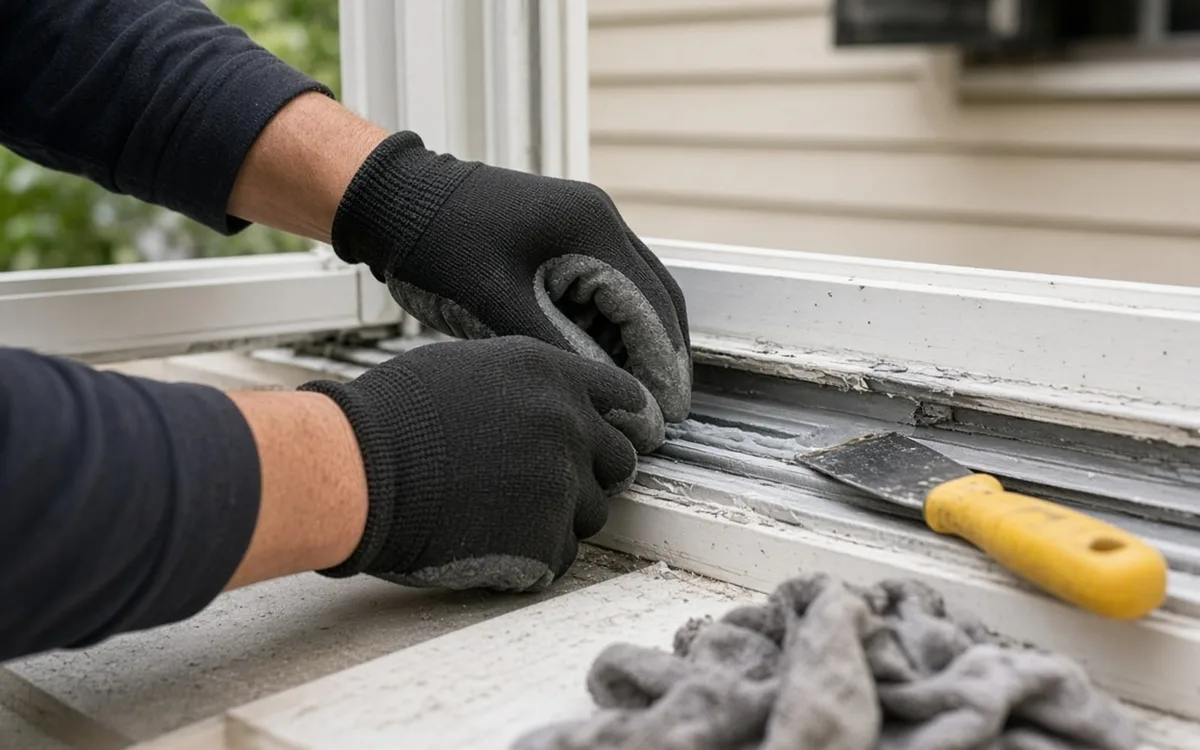
Do not replace for drafts alone until the audit confirms the leak is at the window and not around it. Weatherstripping, sash locks, new glazing compound and a storm window fix many draft complaints for a tenth of the cost. Comfort is a legitimate reason: a 2025 This Old House survey of 1,000 homeowners found 95% said their homes felt more comfortable after replacement and 89% reported lower bills.
Vinyl is the volume choice: lowest cost, no painting, adequate insulation value, and the best resale recovery in Zonda's 2025 Cost vs. Value report at 68.5% on a ten-window project. Wood costs about $4,300 more for the same project and recoups 61.2%, but it suits historic homes and can be repaired rather than replaced. Fiberglass sits between them in price, moves less with temperature than vinyl, and holds paint. Aluminum-clad wood gives a wood interior with a weatherproof exterior.
Glazing matters more than frame for energy. Look at the NFRC label's U-factor, where lower is better and 0.27 or below is a strong retrofit target in cold climates, and the solar heat gain coefficient, where a low number suits hot climates and a higher one helps south-facing glass in the north. Triple-pane earns its premium in cold climates and noisy locations. See the vinyl versus wood comparison for the full trade-off.
| Frame | Installed cost per window | Resale recovery (Zonda 2025) | Fits |
|---|---|---|---|
| Vinyl | $450–$800 typical | 68.5% | Most homes; low maintenance |
| Fiberglass | $700–$1,300 | Not separately reported | Temperature extremes; paintable |
| Wood | $800–$1,500+ | 61.2% | Historic homes; repairable |
| Aluminum-clad wood | $900–$1,800 | Not separately reported | Wood interior, weather exterior |
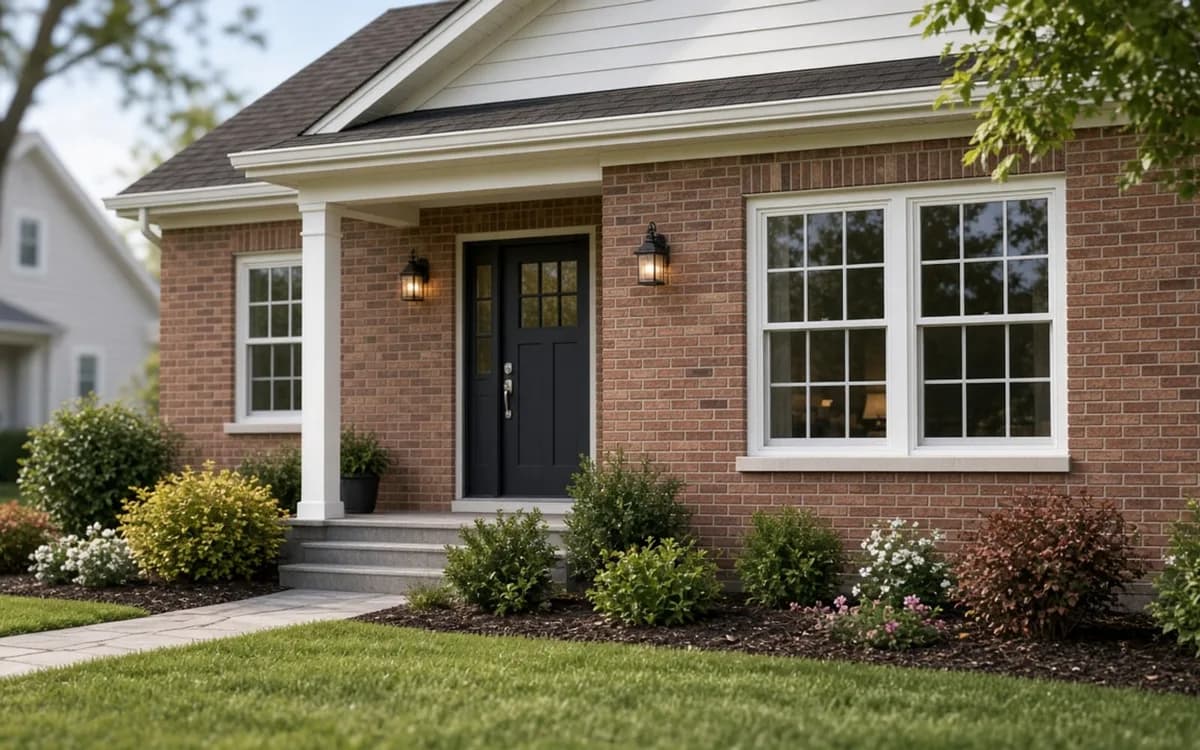
Fixr's January 2026 average is $800/window with a typical range of $450 to $1,200, and labor about 30% of the total. HomeAdvisor's per-window range spans $200 to $600 for a single-hung unit to $1,800 to $4,000 for a bay or bow, with labor at $100 to $400 per window. This Old House's survey respondents reported an average installed cost of $477 per window. Doors: Zonda prices a steel entry door replacement at $2,435 installed; fiberglass and wood entry doors run higher, and patio sliders $1,500 to $4,000.
Three things push a window quote up: full-frame replacement instead of insert, rot repair in the rough opening, and custom sizes or shapes. Three things keep it down: insert replacement where frames are sound, standard sizes, and doing all openings at once so setup and disposal are shared. Ask the installer to price each opening separately with the repair scope stated. The calculator covers the assessment that decides which openings qualify.
An insert replacement keeps the existing frame and slides a new unit inside it, which is faster, cheaper and leaves interior trim intact, but it shrinks the glass area slightly and depends on the old frame being sound and square. A full-frame replacement removes everything to the rough opening, allows the sill and flashing to be rebuilt, and is the only correct choice when rot, water damage or a failed sill pan is found. Ask the installer which they are proposing for each opening and why.
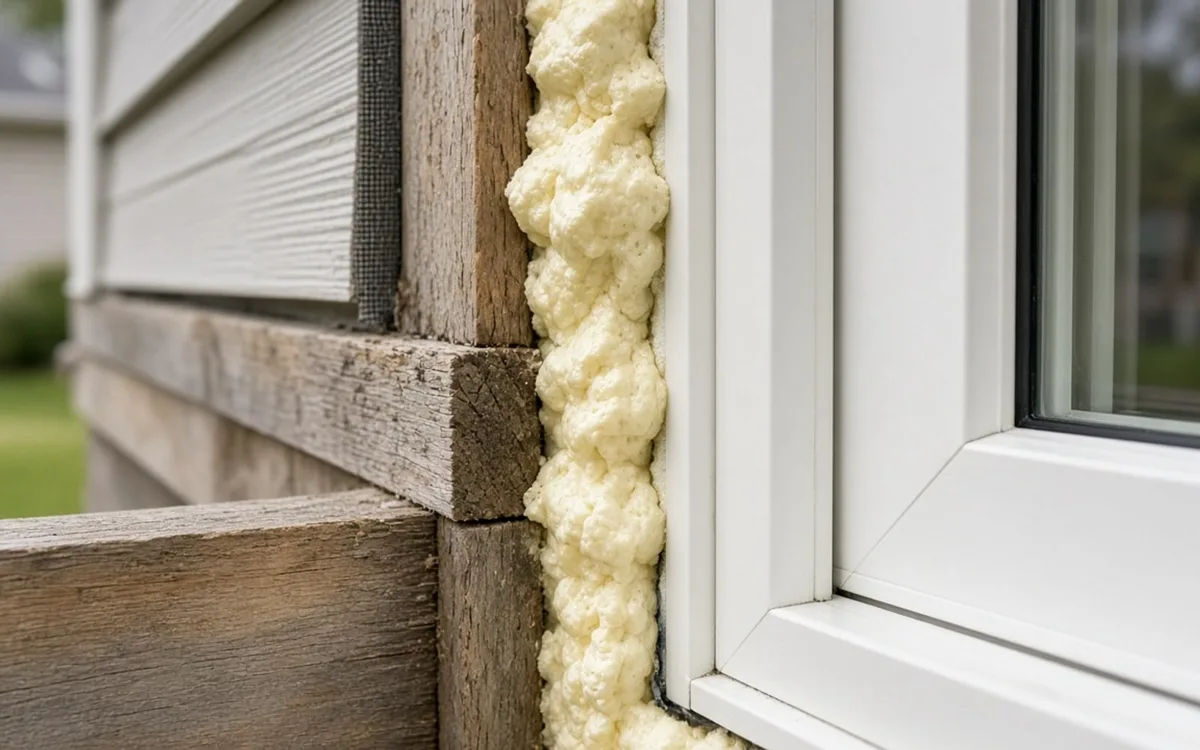
Flashing is where the assembly succeeds or fails. A sill pan, properly lapped flashing tape integrated with the weather barrier, and a continuous air seal between the unit and the rough opening keep water out and air in. The proposal should describe these, name the tape and sealant, and state how the exterior trim and siding will be restored. Skipping this is how a new window rots a wall in five years.
Measurement first, then a lead time of four to twelve weeks for manufactured units, longer for custom sizes and wood. Installation runs roughly one to two hours per insert window and three to four hours per full-frame unit, so a ten-window house is one to three days. Entry doors take a half to full day each including the threshold and weatherstripping. Expect interior touch-up paint to be excluded unless stated. A test of every sash and lock before the crew leaves catches the common problems: binding, gaps at the meeting rail, and a door that needs a strike adjustment.
The federal 25C credit allowed 30% of cost up to $600 / $500 / $150 for windows, doors and audits respectively, inside a $1,200 annual envelope cap, for ENERGY STAR Most Efficient windows and qualifying doors placed in service by December 31, 2025. IRS guidance confirms it is not available for 2026 installations; 2025 work is claimed on Form 5695 with the 2025 return. NAR's 2025 report found 47% of Realtors cite credits and rebates as the top driver of green home demand, so expect some softening.
Window rebates in 2026 come mostly from utilities and a few state programs, typically per-window amounts for ENERGY STAR units, and they are less common than insulation or heat pump rebates. Doors are rarely rebated. Check your utility and the DSIRE database, and get eligibility in writing before it is counted in a proposal.
Cold climates want low U-factor, triple-pane where budgets allow, and attention to condensation at the frame; the Northeast has the fewest original windows at 47.6% per the EIA, reflecting past replacement waves. Hot climates want low solar heat gain glass, and the South has the most original and single-pane windows, at 71.5% mostly original and 37.4% mostly single-pane. Coastal areas need impact-rated or storm-rated units. See the locations page for regional detail.
Line up the unit specification with NFRC U-factor and SHGC, the frame material, insert versus full-frame per opening, the repair scope, the flashing and sealing method, trim and paint restoration, disposal, warranty on the unit and separately on the installation, and lead time. A quote that is cheaper because it is insert-only on rotted frames, or omits flashing, is not comparable. NAR found 37% of Realtors rank windows, doors and siding as the most important green features, so keep the specifications for resale.
Homeowner polls
No votes yet. Yours will be the first. · saved on this device
Zonda's 2025 report found vinyl recoups 68.5% at resale and wood 61.2%.
No votes yet. Yours will be the first. · saved on this device
 Service guideHome Energy Audits
A home energy audit connects comfort complaints and utility bills to the measured condition of the house through a blower door test, thermal imaging, duct leakage testing and combustion-safety checks, then delivers written, prioritized recommendations.
 Service guideInsulation & Air Sealing
Air sealing closes the gaps that move air through the attic plane, rim joist and penetrations; insulation slows heat conduction through the assemblies around them.
Because the job is cheap and the effect is visible. Zonda's 2025 Cost vs. Value report prices a steel entry door replacement at $2,435 and finds it adds $5,270 in value, a 216% return, the second-highest of any project. Windows cost far more per opening and the improvement is less obvious to a buyer walking through. Doors also fix a large single leak path, which is why they are the highest-return envelope upgrade.
U-factor measures how much heat passes through the whole window; lower is better, and 0.27 or below is a strong retrofit target in cold climates. Solar heat gain coefficient measures how much solar heat enters; low values around 0.25 suit hot climates and west-facing glass, while higher values help south-facing windows in the north. The NFRC label reports both for the whole unit, not just the glass.
In cold climates, on north-facing or large glass, and near noise, yes; it improves U-factor meaningfully and reduces condensation. In mild climates the premium of roughly 10 to 20% over double-pane rarely pays back on energy. Weight matters too: triple-pane units are heavier and need frames and hardware rated for them. Ask the installer for the U-factor of both options and decide by climate and comfort.
Yes, and many households do, starting with the worst openings. Per-window cost is higher because setup and disposal are not shared, and matching styles across years can be difficult if a product line changes. If the budget forces phasing, do the failed and single-pane units first, keep the specification, and ask the installer whether the same series will be available later.
Often not for like-for-like insert replacement, but usually yes when the opening size changes, when a bedroom window affects egress, when structural headers are touched, or in historic districts. Some jurisdictions require permits for all window replacement. Ask the installer which applies and who files, and check that egress requirements are met in bedrooms before choosing a smaller insert.
Two separate ones. The manufacturer warranties the unit, typically 10 to 20 years on vinyl frames and 10 to 20 years on the insulated glass seal, sometimes lifetime for the original owner. The installer warranties the installation, usually one to five years, and that is the one covering leaks around the unit. Get both in writing and ask whether the manufacturer warranty requires a certified installer.
Through the 2025 tax year, the federal 25C credit allowed 30% of cost up to $600 for ENERGY STAR Most Efficient windows and $500 for exterior doors, $250 each, within a $1,200 annual cap, for property placed in service by December 31, 2025. Installations in 2026 do not qualify. Some utilities and states offer per-window rebates for ENERGY STAR units; check before purchase.
Ask to see one opening before the exterior trim goes on: a sill pan or pan flashing under the unit, flashing tape lapped over the side flanges and under the head, and the top of the tape tucked behind the weather barrier. Inside, look for foam or backer rod and sealant filling the gap, not just fiberglass stuffed in. Photographs of each opening at that stage are a reasonable request.
 Free toolEnergy audit cost calculator: size the assessment before the retrofit
Size, material tier and complexity in, a realistic budget range out.
 Free toolEnergy retrofit comparisons: the five decisions inside a retrofit
Side-by-side tables for the decisions that change the price most.
 Free toolEnergy retrofit readiness quiz: do you know the sequence and the tests?
10 questions that show what you already know and what to check next.
 Free toolEnergy retrofit polls: how other homeowners weighed the same decisions
See what other planners chose and add your vote.
Tell us the size, the condition of what is there now, and what you want to change. Home Energy Scope passes your request to independent local professionals, who reply with written, no-obligation estimates. The service is free to use.