Have you had a professional energy assessment?
No votes yet. Yours will be the first. · saved on this device
Loading...
Home Energy Scope · Home Energy Audits cost guide
A home energy audit costs about $212 to $698 in 2026, with Angi and HomeAdvisor both putting the average near $437. A walk-through runs $150 to $200, and a comprehensive audit with duct, thermal and combustion testing reaches $500 to $900. Fixr's national average is lower at $250. Many utilities subsidize audits, so check before paying the retail price.
Audit pricing is simpler than most retrofit pricing because the work is mostly a technician's time and calibrated equipment. The spread comes from scope: which tests are included, how large and complicated the house is, and whether the report includes modeled savings for a rebate program. This page breaks the cost down by tier, add-on and house type, with sample budgets.
The cost table on this page lists component prices, and the audit calculator estimates a total for your floor area and complexity. For what each test finds, see the audit service page. Subsidized audits through utilities are covered further down, because they can change the math more than any tier choice does.
| Item | Low | High | Unit | Notes |
|---|---|---|---|---|
| Basic walk-through assessment | $150 | $200 | flat | HomeAdvisor |
| Standard diagnostic audit | $212 | $698 | flat | Angi 2026 benchmark, avg $437 |
| Full audit with all tests | $500 | $900 | flat | HomeAdvisor |
| Blower door test alone | $150 | $450 | flat | Fixr |
| Thermal imaging | $150 | $250 | flat | HomeAdvisor ~$200 |
| Duct leakage test | $100 | $150 | flat | HomeAdvisor ~$100 |
| Post-work test-out | $150 | $350 | flat | Verifies air sealing results |
HomeAdvisor prices a basic walk-through at $150 to $200 and a full audit with all tests at $500 to $900. In between sits the standard diagnostic audit with a blower door and thermal spot checks, which Angi's 2026 benchmark puts at $437 and HomeAdvisor at $437. Fixr's lower average of $250 reflects a smaller 1,200-square-foot reference home.
The calculator's three tiers mirror these ranges: a walk-through at a fraction of the standard price, the standard diagnostic audit at the benchmark, and a comprehensive audit at roughly one and a half times the standard. Most homeowners planning envelope work should budget for the standard tier; the comprehensive tier is worth it when ducts run outside the conditioned space, gas appliances are present, or drafts persist, as they do most or all of the time in 13.8% of homes by our analysis of the EIA's 2024 household survey.
| Tier | Typical price | Source |
|---|---|---|
| Walk-through | $150 to $200 | HomeAdvisor |
| Standard diagnostic | $212 to $698, average $437 | Angi, HomeAdvisor |
| Comprehensive | $500 to $900 | HomeAdvisor |
HomeAdvisor lists component prices when tests are bought separately: a blower door test around $350, a duct leakage test around $100, and thermal imaging around $200. Fixr's standalone blower door range is $150 to $450. Combustion safety testing on gas appliances is typically bundled into a comprehensive audit and priced near $150 as an add-on in the calculator.
A post-work test-out, which confirms the sealing results after insulation work, is often cheaper when the same firm did the original test. A written retrofit plan with modeled savings, needed for some state rebate programs, adds a few hundred dollars. When comparing offers, add up the tests each one includes rather than comparing totals alone.
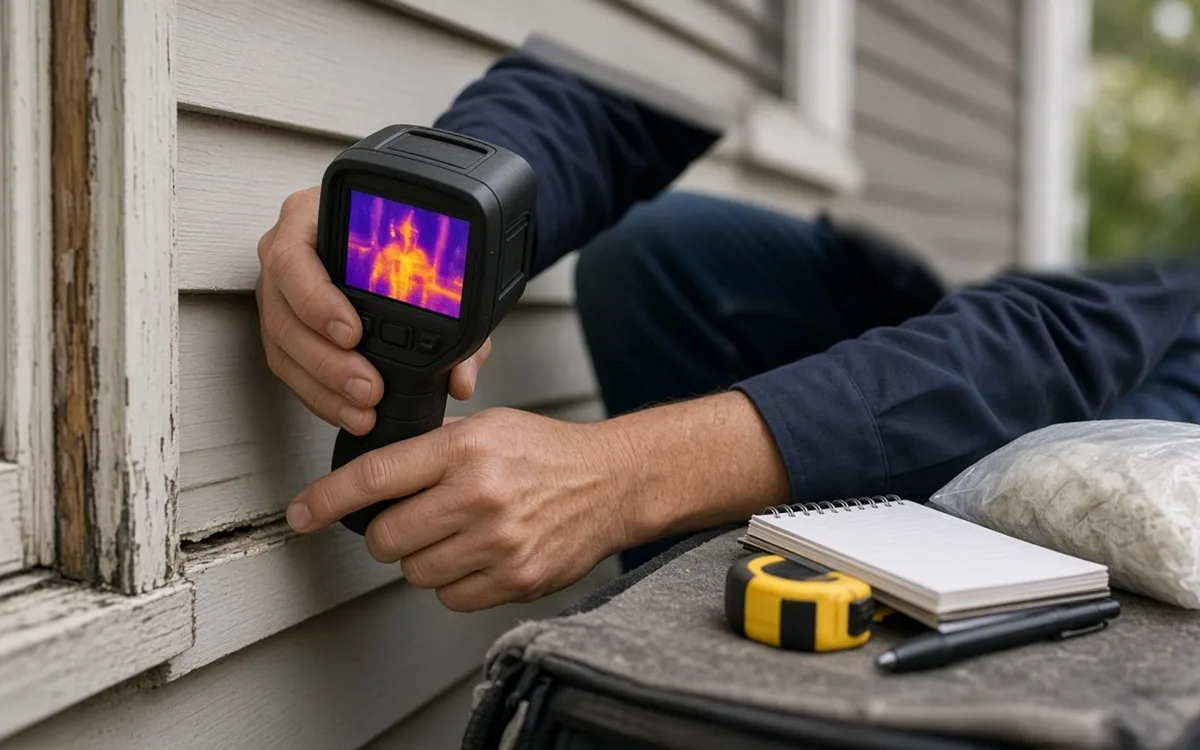
Larger homes take longer to inspect, image and model, so prices rise with floor area. The calculator's base rate of about $0.22 per square foot comes from Angi's benchmark over a 2,000-square-foot home. Complexity has a separate effect: two or more HVAC systems, a combination of attic and crawlspace, additions with separate zones, and older construction all add setup and inspection time. Age also tracks symptoms: by our count of EIA 2024 data, frequent draftiness runs 12.3% in owner-occupied homes built before 1990 and 5.8% in newer ones, a 6.5 pts gap.
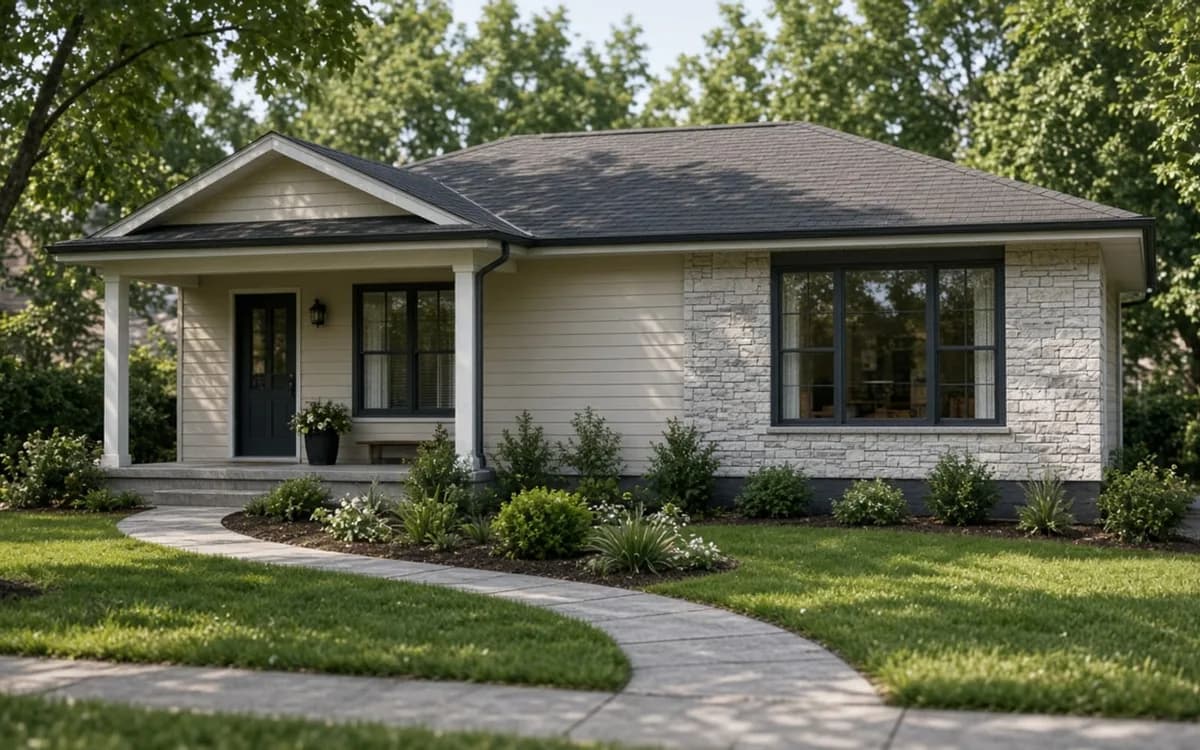
A one-story home with a single attic and one system sits at the low end. A two-story home with a basement and an addition sits in the middle. A large, older home with multiple systems and mixed foundations can exceed the standard range even at the standard tier. Rural locations may add travel charges, which are not included in national averages.
Pearl's January 2026 cost roundup puts numbers on the size effect. Its audit-by-size table, reproduced in this section, runs from about $250 for a home under 1,000 square feet to $595 and up past 3,000, with a national average of $437 that matches Angi and HomeAdvisor. The ranges are wide because each size band still spans walk-throughs and full diagnostics.
| Home size | Average audit cost (Pearl, 2026) | Typical range (Pearl, 2026) |
|---|---|---|
| Under 1,000 sq ft | $250 | $100 to $500 |
| 1,000 to 1,500 sq ft | $345 | $120 to $750 |
| 1,500 to 2,000 sq ft | $440 | $160 to $1,000 |
| 2,000 to 2,500 sq ft | $500 | $200 to $1,250 |
| 2,500 to 3,000 sq ft | $570 | $240 to $1,500 |
| Over 3,000 sq ft | $595 and up | $280 to $1,800 |
Many utilities subsidize audits to encourage efficiency work, sometimes covering most or all of the cost. The scope varies: some subsidized audits are full diagnostic assessments with a blower door, while others are walk-throughs with a kit of efficient bulbs and fixtures, which still matters in the 10.3% of homes our EIA analysis finds using no indoor LEDs. Always ask which tests are included before comparing a subsidized audit with a private one.
The federal 25C credit included a $150 sub-limit for home energy audits, one of the $600 / $500 / $150 caps, but it ended for audits performed after 2025. For 2026, utility programs and state rebate programs that require an assessment are the main sources of help. If income qualifies, the DOE's Weatherization Assistance Program provides assessments as part of free weatherization.
Keep the blower door test above all else; it produces the measured number that makes every later decision more accurate. Thermal imaging can be reduced to spot checks rather than a full survey. Modeled savings reports can be skipped unless a rebate program requires them. Combustion testing should not be skipped when gas appliances are present and the house will be tightened.
If the budget allows only a walk-through, use it as a screen and plan the blower door test at the time of the retrofit, when many insulation contractors will run a pre-test and test-out as part of the job. That approach costs less up front but gives up the independent assessment.
These examples use national figures from HomeAdvisor, Angi and Fixr and assume no utility subsidy. Actual prices depend on local labor rates and scope. Use them to judge whether a quote is in a reasonable range, and run the calculator with your own floor area. Travel charges and multiple systems are the most common reasons a local quote lands above these ranges.
| Home | Scope | Estimated budget |
|---|---|---|
| 1,200 sq ft ranch, one system | Standard diagnostic | About $250 to $400 |
| 2,000 sq ft two-story, basement | Standard plus duct test | About $450 to $600 |
| 3,200 sq ft older home, two systems | Comprehensive plus test-out | About $800 to $1,200 |
Pearl Certification, citing Angi, reports that acting on audit recommendations saves about $685/yr, and puts the payback on a $437 audit at roughly seven months. That savings figure depends on actually doing the recommended work, so treat the audit as the first line in a retrofit budget rather than a standalone purchase.
The audit also protects larger spending. A measured baseline lets you verify a contractor's sealing, and a prioritized report keeps money from going to low-return upgrades. The retrofit cost guide shows how audit findings translate into project budgets, and the audit scope comparison helps choose the tier. Budget the audit and the test-out together from the start.
An audit quote that lists only a price is hard to compare. Ask each assessor to state in writing which tests are included, how the blower door result will be reported, whether thermal imaging covers the whole envelope or spot checks, whether ducts and combustion appliances will be tested, what the written report contains, and whether a test-out visit is included or priced separately. Also ask how long the visit takes and when the report arrives.
Ask about credentials and independence too. BPI certification or RESNET rater status indicates training in the testing protocols. If the assessor also sells insulation, windows or solar, ask whether the report will be usable by other contractors and whether the audit fee is credited against their work. None of these answers raises the price, but together they tell you whether a lower quote is a real saving or a smaller scope.
By the numbers
Planning figures from published U.S. sources; every card links to where the number came from.
$437
average home energy assessment cost, typical range $212–$698 (Angi, 2026)
Angi's cost guide, updated April 2026, prices the assessment only. It does not include insulation, windows, solar or a whole-house retrofit; ask which diagnostic tests are included.
Angi, How Much Does an Energy Audit Cost (2026)$437
average professional home energy audit cost, range $212–$698 (HomeAdvisor)
Basic walk-throughs run $150–$200 while full diagnostic audits with blower door ($350), duct test ($100) and thermal imaging ($200) reach $500–$900.
HomeAdvisor, Home Energy Assessment Cost (2026)$250
national average energy audit cost, range $145–$420; blower door $150–$450
Fixr's average for a standard audit on a 1,200 square foot home includes a blower door test. Utilities often subsidize audits, so check before paying retail.
Fixr, Energy Audit Cost (2025)$685/yr
savings from acting on energy audit recommendations, per Pearl citing Angi
Pearl's 2026 audit statistics put the payback on a $437 audit at roughly seven months, and report a professional audit finds about 35 problems versus 12 for a DIY check.
Pearl Certification, Home Energy Audit Cost 2026 Statistics (2026)The calculator uses the same home energy improvements benchmarks as this guide. Set the size and tier, then request a written estimate to check it against a real proposal.
Homeowner polls
No votes yet. Yours will be the first. · saved on this device
No votes yet. Yours will be the first. · saved on this device
Scope first, then credentials. Pearl's 2026 figures put the average audit by a BPI-certified professional at $465, against $285 for a non-certified auditor and $525 for a RESNET HERS rater. One company's audit may be a walk-through, another's a blower door test with a brief report, and a third's a full diagnostic with duct, thermal and combustion testing plus modeled savings. Firms that also install work sometimes discount the audit expecting to win the job. Compare the tests and report contents before comparing price.
Usually not. The test-out is a separate visit after insulation and sealing, and most companies price it separately at $150 to $350. Some insulation contractors include pre- and post-tests in their bid. Ask both the auditor and the insulation contractor who will do the test-out and whether it is priced in.
A HERS rating by a RESNET-certified rater follows a standardized protocol and produces an Index score, and it is often priced higher than a basic diagnostic audit because of the modeling and registration involved. It is most useful for selling a home or qualifying for programs that require it. For planning a retrofit, a diagnostic audit may be sufficient.
Some firms are busier in fall and winter, when heating complaints peak and thermal imaging works best, which can mean longer wait times rather than higher prices. Booking in late summer or early fall can shorten the wait. Prices are more affected by house size and scope than by season.
Some companies credit the audit fee against the retrofit work if you hire them within a set time. That can be a good deal, but it creates an incentive to recommend their own products. If you take the credit, still insist on the measured leakage number and a prioritized report you could hand to another contractor.
A comprehensive audit typically adds a full thermal imaging survey under depressurization, duct leakage testing, combustion safety and carbon monoxide testing on gas appliances, and a written plan with modeled savings. HomeAdvisor prices the full package at $500 to $900. It is most valuable for homes with ducts outside the conditioned space or gas appliances.
Renters can request a walk-through or diagnostic audit, but the property owner usually decides whether to act on findings. Some utilities offer free assessments to renters and landlords. If you rent, a walk-through that identifies simple measures like weatherstripping and efficient bulbs is often the best value, and the report can support a conversation with the owner.
 Insulation & Air Sealing · Cost guideInsulation and air sealing cost in 2026, per square foot and per project
Attic insulation averages about $2,100 in 2026 per HomeAdvisor, with a typical range of $1,700 to $2,500.
 Window & Door Replacement · Cost guideWindow and door replacement cost in 2026, per opening and for the whole house
Window replacement averages about $800 per window in 2026 per Fixr, typically $450 to $1,200, and a whole-home project averages $7,347 per HomeAdvisor, ranging from $3,436 to $11,837.
 Solar Panel Installation · Cost guideSolar panel installation cost in 2026, per watt and per system
Solar costs about $2.60 per watt in 2026 per EnergySage, or about $31,135 for a 12 kW system before incentives.
 Service guideHome Energy Audits
A home energy audit connects comfort complaints and utility bills to the measured condition of the house through a blower door test, thermal imaging, duct leakage testing and combustion-safety checks, then delivers written, prioritized recommendations.
Service guideInsulation & Air SealingAir sealing closes the gaps that move air through the attic plane, rim joist and penetrations; insulation slows heat conduction through the assemblies around them.
Service guideWindow & Door ReplacementWindow and door replacement addresses openings with a defined problem: damage, failed seals, poor operation, drafts, single-pane glass in a cold climate, or a door that leaks and does not latch.
 Free toolEnergy audit cost calculator: size the assessment before the retrofit
Size, material tier and complexity in, a realistic budget range out.
 Free toolEnergy retrofit comparisons: the five decisions inside a retrofit
Side-by-side tables for the decisions that change the price most.
 Free toolEnergy retrofit readiness quiz: do you know the sequence and the tests?
10 questions that show what you already know and what to check next.
 Free toolEnergy retrofit polls: how other homeowners weighed the same decisions
See what other planners chose and add your vote.
Tell us the size, the condition of what is there now, and what you want to change. Home Energy Scope passes your request to independent local professionals, who reply with written, no-obligation estimates. The service is free to use.