What total budget are you planning for energy work?
No votes yet. Yours will be the first. · saved on this device
Loading...

Home Energy Scope · Costs
In 2026 a home energy audit runs about $212 to $698, attic insulation about $1,700 to $2,500, a whole-home window project about $3,436 to $11,837, and solar about $2.60 per watt before incentives, according to HomeAdvisor, Angi and EnergySage. Air sealing and insulation give the most savings per dollar. The federal 25C and 25D credits ended in 2025, so state and utility rebates now shape net cost.
By Home Energy Scope editorial · Updated 2026-09-25
Energy retrofit prices span two orders of magnitude, from a walk-through assessment that costs less than a month of bills to a battery-backed solar system that costs as much as a car. That spread makes averages misleading unless they are tied to scope. This guide groups 2026 costs by the size of the job, then explains what moves a bid up or down, how labor and materials split, and which costs rarely appear on the first estimate.
Every figure below comes from a named publisher. Where the site does not have a sourced number, the guide describes the effect in words rather than inventing a range. For per-service detail, each service has its own cost page, starting with insulation and air sealing costs. Treat the ranges as a way to test a local quote, not as a price list.
The table groups typical projects by size. Figures are national and before incentives. The small tier is what most households should do first; the large tier is where financing and rebate timing start to matter. HomeAdvisor's 2026 data puts attic insulation at an average of $2,100, a whole-home window project at $7,347, and EnergySage reports solar at $2.60/W before incentives.
| Scope | Typical work | Typical 2026 range | Source |
|---|---|---|---|
| Assessment only | Walk-through or diagnostic audit | $150 to $698 | HomeAdvisor, Angi |
| Small envelope | Attic air sealing plus blown-in top-up | About $1,000 to $3,500 | HomeAdvisor |
| Full envelope | Attic, rim joist, spray foam areas, test-out | Several thousand dollars; spray foam attics to $9,000 | HomeAdvisor |
| Windows | Whole-home replacement | $3,436 to $11,837 | HomeAdvisor |
| Solar | 12 kW system before incentives | About $31,135 | EnergySage |
No, not for work you buy yourself. The IRS says the 25C Energy Efficient Home Improvement Credit covers improvements made through December 31, 2025, and the 25D Residential Clean Energy Credit is not available for property placed in service after that date. Work finished in 2025 is claimed on Form 5695 with the 2025 return.
One federal path remains for solar: a leasing company or PPA provider that owns the panels can claim the commercial Section 48E credit, 30% of eligible cost before adders, on systems placed in service by December 31, 2027. The solar cost page explains how to ask what share of it reaches your rate.

The biggest reason is that the bids are not for the same attic. One contractor prices a blown-in top-up over whatever is there; another prices sealing every top plate and penetration first, baffles at the eaves, a hatch cover, and a test-out. The second is more expensive and usually delivers most of the savings. HomeAdvisor's blown-in average of $1,661 and its spray foam average of $2,888 show how material choice alone moves the number.
Access is the second driver. By our analysis of EIA 2024 survey data, 85.6% of attics are unfinished, which usually means open joists a crew can reach, but not always easily. A low-slope roof, a tiny hatch, heavy existing debris, or vermiculite that must be tested before anyone disturbs it all add labor. Removing old insulation that is wet, contaminated by pests or compressed is a separate line and can double the job. Ask each bidder to list sealing, removal, baffles, ventilation and testing separately so you can compare scope before price.
Insulation is labor-heavy. HomeAdvisor lists installation labor at roughly $1.50 to $3 per square foot on top of material that runs $1 to $5 per square foot depending on type, and blown-in crews bill about $40 to $70 an hour. Air sealing is almost entirely labor, because the materials are foam, caulk and blocking that cost little. That is why sealing gets skipped on low bids: it is the easiest line to cut without the homeowner noticing.
Windows split differently. HomeAdvisor estimates labor at about 15% of a window project, while Fixr puts it closer to 30%; the gap reflects whether trim, interior finishes and rot repair are counted as labor. EnergySage notes that solar panels themselves are only about 12% of a system's price, with labor, inverters, permitting and company overhead making up the rest. Knowing the split tells you which lines have room to negotiate.
Labor rates follow local wages, so metro areas on both coasts price above national averages and rural areas can add travel charges. Climate changes scope rather than rate: ENERGY STAR's targets run from R-30 for an uninsulated attic in zone 1 to R-60 from zone 4 north, so the same floor area needs roughly twice the material up north. In the South, our analysis of EIA 2024 data found 55.3% of homes have an attic, and ducts running through it make duct sealing a bigger share of the bill.
Windows follow a similar pattern. By the same count, 37.4% of Southern homes still have mostly single-pane glass, and hot-climate buyers pay for low solar heat gain coatings. Solar cost per watt varies less by region than solar value does, because sunlight hours and utility export rules differ so much. Use the calculator for assessment pricing and treat regional notes as adjustments to the national figures.
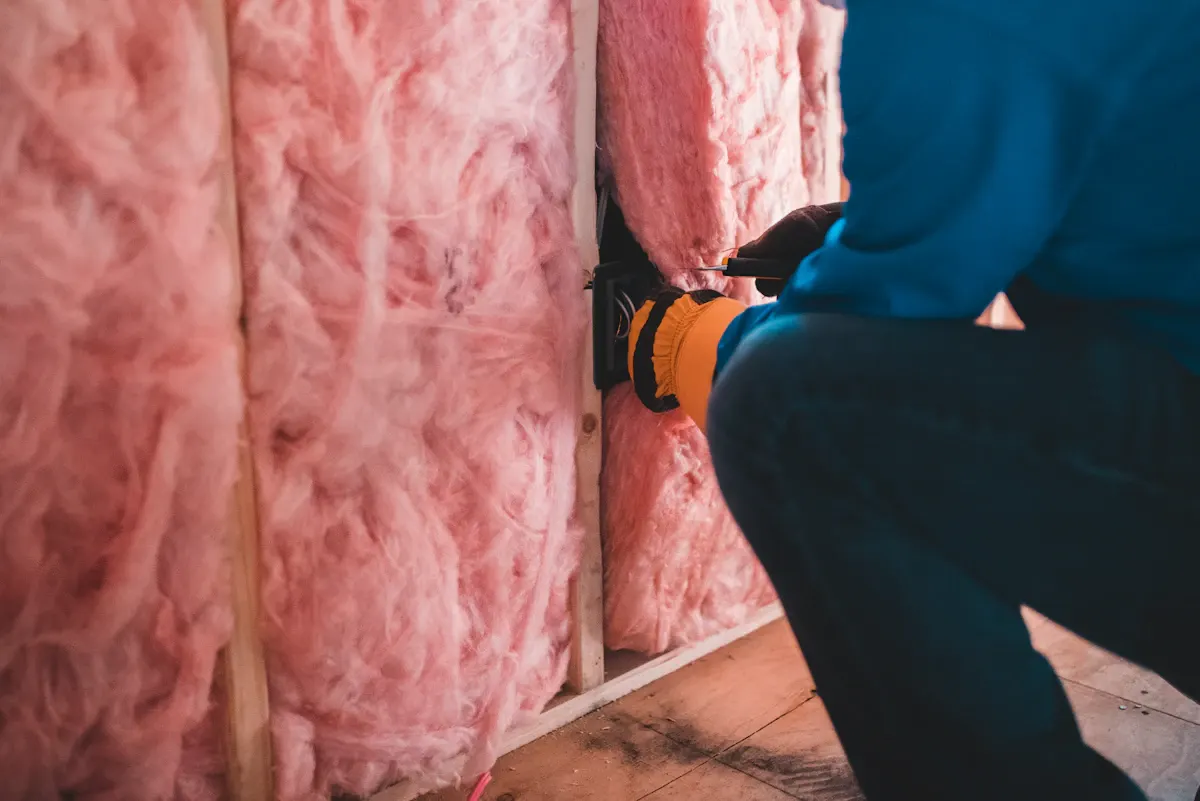
Hidden costs in energy work are mostly discoveries: things nobody can see until the attic is opened or the old window is out. Budgeting a contingency of ten to fifteen percent for envelope and window work is a common planning practice. For solar, the surprises are structural and electrical and are usually found at the site survey, before you sign, if you ask for that survey early. Resist trimming the contingency: Pearl's registry analysis found ~90% of homes have air leakage problems worth fixing, and on envelope work the cut usually lands on sealing.
Through 2025, the IRS 25C credit covered 30% up to $3,200 a year, with sub-limits of $600 / $500 / $150 for windows, doors and audits. The 25D credit covered 30% of solar and batteries. Both ended for property placed in service after December 31, 2025. A 2026 bid should therefore be judged at full price unless a state or utility program applies, and any contractor still subtracting a homeowner federal credit from a 2026 purchase price is working from outdated information.
State programs funded through the Department of Energy offer the largest remaining help. HEAR rebates reach up to $14,000 per household in launched states, and the DOE describes a companion HOMES program worth up to $8,000 for whole-home retrofits that model at least 20% savings. Utilities often subsidize audits outright. The incentive poll shows how many readers have checked their address, and the answer is usually fewer than should have.
Where HEAR stands, as of September 2026, depends entirely on the state, and programs have closed as fast as they opened. California's single-family HEAR money was fully reserved statewide on Feb 24, 2026. The state table in this section is built from each state energy office's own page, checked in September 2026; for any other state, start from your state energy office, which runs the program.
| State | HEAR / HOMES status as of September 2026 | Official source |
|---|---|---|
| California | Single-family HEAR fully reserved Feb 24, 2026, waitlist only; HOMES and HEAR Phase II not yet available | California Energy Commission |
| Colorado | HEAR single-family closed in both regions; multifamily rebates listed as coming in 2026 | Colorado Energy Office |
| Michigan | MiHER (HEAR and HOMES) open, but new income-qualified applications paused in the Detroit, Warren, Grand Rapids, Lansing and Kalamazoo districts | Michigan EGLE |
| New York | HEAR incentives offered to income-eligible households through EmPower+ | NYSERDA |
| Wisconsin | HOMES and HEAR both available through Focus on Energy | Focus on Energy (PSC of Wisconsin) |
A useful bid names the areas, the method, the material, the depth or R-value, and the test. For insulation that means square footage, material, settled depth, R-value, sealing locations, baffles, hatch treatment and a before-and-after blower door number. For windows it means the unit model, U-factor, solar heat gain coefficient, insert or full-frame installation, flashing method, trim and disposal. For solar it means system size in kilowatts, estimated annual production, equipment models and warranties.
Compare bids by writing each one into the same columns. Lines that appear on one bid and not another are either extras or omissions, and you need to know which. Ask what is excluded. A price that looks low because it leaves out sealing or testing is not a saving. The blown-in versus spray foam comparison is a good example of how two honest bids can differ because they solve different problems.
Returns differ by measure. ENERGY STAR estimates air sealing plus insulation saves about 15% on heating and cooling, and Pearl, citing Angi, reports households acting on audit recommendations save about $685/yr. EnergySage reports an average solar payback near ten years, a figure that depends heavily on local rates and export rules. At resale, Zonda's 2025 report found vinyl windows recouping 68.5% of cost.
Treat savings estimates as ranges, not promises. Actual results depend on how the house is used, energy prices, and whether the work was done completely. The best protection is a measured test-out and a year of bills afterward to compare against the year before. If you want to discuss a specific scope, the request form routes it to independent local professionals for written estimates.
Homeowner polls
No votes yet. Yours will be the first. · saved on this device
The federal 25C and 25D credits ended for property placed in service after Dec 31, 2025.
No votes yet. Yours will be the first. · saved on this device
EPA estimates sealing and insulating saves about 15% of heating and cooling costs.
No votes yet. Yours will be the first. · saved on this device
Attic air sealing, usually a few hundred to about $1,500 by the site's cost table, is the cheapest measure that reliably shows up in a blower door number. Pair it with a test-out so you know it worked. On its own it rarely eliminates discomfort, but it makes any insulation added afterward perform closer to its rated value and reduces the stack-effect drafts felt downstairs.
It depends on the size of the job. The cost data shows that envelope work comes in modest phases of a few thousand dollars, which many households pay as they go, while windows and solar are larger. Some states and utilities offer low-interest efficiency loans, and those terms are worth reading alongside any contractor-arranged financing.
Utilities subsidize assessments because they want to reduce demand, and many run them through approved contractors. Some are full diagnostic audits with a blower door, others are walk-throughs with a kit of light bulbs and showerheads. Ask which tests are included. A free walk-through is a fine start; a subsidized diagnostic audit is an excellent deal compared with Angi's retail benchmark.
Fixr lists a standalone blower door test at $150 to $450, and a test-out after insulation work is usually at the lower end when the same firm did the pre-test. It is the only way to confirm the sealing was done, and many rebate programs require it. If a bid omits it, ask for it as a line item rather than accepting the job without verification.
Usually not. HomeAdvisor's attic and blown-in averages assume adding over existing material. Removal involves vacuum equipment, disposal fees and more labor, and it is only necessary when the old material is wet, moldy, contaminated by rodents or blocking access to air sealing. Ask the contractor to show you why removal is needed before accepting that line.
Not usually, because different trades do the work and there is little shared setup. The case for combining them is scheduling rather than price. The better reason to separate them is sequence: envelope sealing first often reveals that fewer windows need to be replaced for comfort, which reduces the larger bill. Rebate annual limits can also favor spreading work across years.
A contingency of ten to fifteen percent is a common planning practice for envelope and window work on homes built before about 1980, where vermiculite, knob-and-tube wiring, lead paint and rotted framing are more likely. Newer homes need less. Ask each contractor what conditions would change their price and how they will document and approve those changes before proceeding.
Some do and some do not, which is why solar bids vary so much. The site's cost table lists a main panel upgrade at $1,500 to $4,000 and panel removal and reinstall for a later reroof at $2,000 to $5,000. Ask whether the quote includes any panel, meter or structural work, and whether it assumes the current roof will outlast the system.
 Service guideHome Energy Audits
A home energy audit connects comfort complaints and utility bills to the measured condition of the house through a blower door test, thermal imaging, duct leakage testing and combustion-safety checks, then delivers written, prioritized recommendations.
 Service guideInsulation & Air Sealing
Air sealing closes the gaps that move air through the attic plane, rim joist and penetrations; insulation slows heat conduction through the assemblies around them.
 Service guideWindow & Door Replacement
Window and door replacement addresses openings with a defined problem: damage, failed seals, poor operation, drafts, single-pane glass in a cold climate, or a door that leaks and does not latch.
 Service guideSolar Panel Installation
Solar panel installation covers the roof and shading assessment, equipment selection, electrical and structural permits, utility interconnection and the production and financial assumptions in the proposal.
 PlanningHow to plan an energy retrofit so each step makes the next one cheaper
Plan an energy retrofit by measuring before buying.
 MaterialsInsulation, glazing and solar equipment: choosing materials by the job they do
Blown-in fiberglass or cellulose is the standard for open attic floors after air sealing; closed-cell spray foam earns its higher price at rim joists and roof decks.
 PermitsPermits and codes for energy retrofits: what usually needs inspection and why
Permit rules vary by city and county, but a pattern holds.
 Free toolEnergy audit cost calculator: size the assessment before the retrofit
Size, material tier and complexity in, a realistic budget range out.
 Free toolEnergy retrofit comparisons: the five decisions inside a retrofit
Side-by-side tables for the decisions that change the price most.
 Free toolEnergy retrofit readiness quiz: do you know the sequence and the tests?
10 questions that show what you already know and what to check next.
 Free toolEnergy retrofit polls: how other homeowners weighed the same decisions
See what other planners chose and add your vote.
Tell us the size, the condition of what is there now, and what you want to change. Home Energy Scope passes your request to independent local professionals, who reply with written, no-obligation estimates. The service is free to use.