Have you had a professional energy assessment?
No votes yet. Yours will be the first. · saved on this device
Loading...
Home Energy Scope · Walk-through assessment vs Diagnostic audit with blower door
A walk-through assessment costs about $150 to $200 and uses a visual inspection and checklist to flag obvious problems. A diagnostic audit, averaging about $437 in Angi's 2026 benchmark, adds a blower door, thermal imaging and often duct and combustion testing, producing measured numbers a contractor can be held to. Book the diagnostic audit before spending more than a few thousand dollars on envelope work.
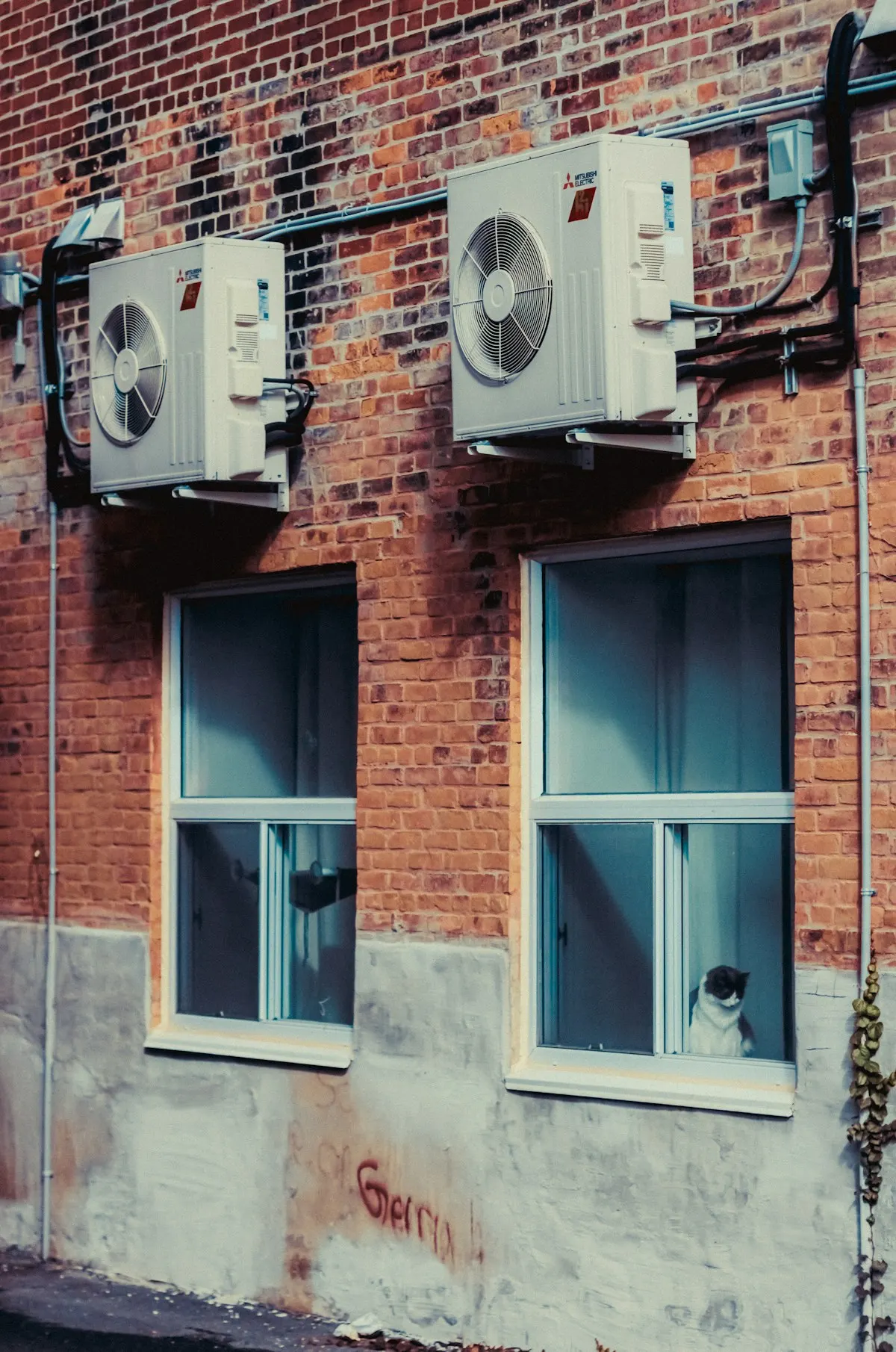
Photo: Linus Belanger · License.
Both services are sold as energy audits, which causes confusion. One is a screen: a trained eye walks the house, looks at insulation depth, equipment age and obvious gaps, and suggests next steps. The other is a measurement: a calibrated fan depressurizes the house, a thermal camera shows where air and heat move, and the result is a leakage number and a prioritized plan. Each has a place.
This page covers realistic scenarios, cost over ten years, climate factors, resale value of documentation, common mistakes and how to compare offers. For test details see the energy audit service page, and for pricing by floor area use the audit calculator. Both options are often available from the same assessor, so the choice is mostly about how much you plan to spend afterward and how much certainty you want before you spend it.
A walk-through is a visual inspection with a checklist at $150 to $200; a diagnostic audit adds a blower door, thermal imaging and often duct and combustion testing at $212 to $698 or more, and produces measured numbers a contractor can be held to. The walk-through screens; the audit diagnoses.
| Factor | Walk-through assessment | Diagnostic audit with blower door |
|---|---|---|
| Upfront cost | $150–$200 (HomeAdvisor); often free from utilities | $212–$698, avg $437 (Angi 2026); $500–$900 comprehensive |
| Instruments | Flashlight, ruler, checklist | Blower door, thermal camera, duct tester, CO meter |
| Output | General recommendations | Measured leakage, annotated images, prioritized measures |
| Problems found | About 12 (DIY-level, Pearl citing Angi) | About 35 (Pearl citing Angi) |
| Safety | Combustion safety usually not tested | Combustion safety tested before tightening |
| Time on site | 1–2 hours | 2–4 hours |
| Use for rebates | Sometimes enrolls you | Often required for HOMES modeled-savings rebates |
| Best for | Single visible problem; free first step | Any home with unexplained symptoms or gas appliances |
The diagnostic audit wins for any home with symptoms it cannot explain, gas appliances, or a retrofit budget above a few thousand dollars. Pearl's statistics, citing Angi, report about $685/yr a year saved by acting on audit findings against an average cost of $437, and the blower door number is what lets you hold the insulation contractor to a result. The audit page lists what the report should contain.
The walk-through wins as a free utility offering, as a screening for a house with one obvious problem, and for renters who need a list to hand the owner. Its limit is that it cannot measure, so it cannot tell you whether the sealing worked or whether the water heater will backdraft afterward. Use it to decide whether to pay for the audit, not instead of one.
A walk-through is enough when the problem is obvious and cheap to fix, such as an attic with three inches of insulation and an unsealed hatch, or when you want a quick screen of a house you are considering buying. It is also a reasonable choice for rentals and for homes that were built or renovated recently to a modern energy code, where large hidden leaks are less likely. Our analysis of the EIA's 2024 survey supports that: frequent draftiness in owner-occupied homes runs 12.3% for those built before 1990 and 5.8% for newer ones, a 6.5 pts gap.
The diagnostic audit is needed when you plan significant spending, when discomfort does not match what is visible, when ducts run through unconditioned space, or when combustion appliances are present and the house will be tightened. Pearl Certification's registry analysis finds air leakage problems in ~90% of homes, and only a blower door quantifies them. A visual inspection can guess; the test measures.
HomeAdvisor prices a walk-through at $150 to $200 and a full audit with all tests at $500 to $900; Angi's benchmark for a standard diagnostic audit is $437. Fixr's national average of $250 reflects smaller homes. The price gap is a few hundred dollars, which is small relative to the retrofit work either assessment leads to.
The ten-year value comes from what the audit prevents and enables. Pearl, citing Angi, reports that acting on audit recommendations saves about $685/yr, and notes a professional audit finds far more problems than a do-it-yourself check. A measured baseline also lets you verify the contractor's work with a test-out, which protects the much larger investment in sealing and insulation.
In cold and mixed climates, the diagnostic audit's combustion safety testing matters most, because gas furnaces, boilers and water heaters are common and tightening the house changes how they draft. Thermal imaging is clearest in the heating season when indoor and outdoor temperatures differ widely. Our analysis of EIA 2024 data shows 13.8% of homes drafty most or all of the time nationally, with higher shares in the Northeast.
In hot climates with ducts in the attic, the duct leakage test often produces the most valuable finding, and it is only part of a diagnostic audit. Walk-throughs can spot disconnected ducts but cannot measure total duct leakage. In mild climates with low bills, a walk-through may be enough to confirm the house is in reasonable shape.
A walk-through produces a checklist that rarely carries weight with buyers. A diagnostic audit report with blower door numbers, and especially a HERS rating from a RESNET-certified rater, gives buyers standardized evidence. RESNET reports 436,798 homes received a HERS score in 2024, and the Index is increasingly familiar to agents in markets with green-home disclosures. A walk-through checklist does not carry the same weight.
If you are planning work and a sale within a few years, a diagnostic audit before and a test-out after create a documented improvement. That record, alongside permits and invoices, is what an appraiser or buyer can use. A walk-through alone does not create that paper trail. Keep the reports with your permits and invoices.
The first is booking a walk-through and treating its suggestions as a measured plan; it can say an attic looks thin, but not how much leakage sealing will remove. The second is booking a diagnostic audit from a company that only sells one product, then accepting a report that recommends only that product. The third is failing to share utility history, which prevents the assessor from linking findings to your actual usage.
Another mistake is skipping the test-out after the work. Without it, the pre-work blower door number has little use. Ask any auditor whether they will return to test after the retrofit, and at what price; the calculator includes this as an add-on. Without that second test, you cannot tell whether the sealing you paid for actually happened. The test-out is what turns the first number into proof.
List what each offer includes: blower door test with the number reported as CFM50 or ACH50, thermal imaging under depressurization, duct leakage testing, combustion safety testing, a written report with prioritized measures and estimated savings, and whether a test-out is included. Ask about the auditor's credentials, such as BPI certification or RESNET rater status, and whether they install work themselves.
Check your utility first; many subsidize diagnostic audits, sometimes to little or no cost. Compare the subsidized scope with private offers line by line. The planning guide explains what to gather before the visit, and the estimate request lets you ask for a specific scope. Naming the tests you want in writing is the simplest way to get offers that can be compared fairly.
The practical difference between the two services shows up after the visit. A walk-through typically leaves a checklist of observations and suggestions, sometimes with a few efficient light bulbs or low-flow fixtures installed on the spot, useful in the 10.3% of homes our EIA analysis finds with no indoor LEDs. It is useful as a to-do list but has no measured baseline, so it cannot tell you afterward whether the work you paid for changed anything. It also rarely ranks the suggestions by expected savings per dollar.
A diagnostic audit leaves a report with measured numbers, thermal images of problem areas, a ranked list of measures and, often, estimated savings. That document can be handed to several contractors so they bid the same scope, and it becomes the baseline for the test-out. For rebate programs based on modeled savings, it is often the required starting point, and for a future sale, it is the start of a documented history of improvements.
Before booking either, ask for a sample report from the assessor. The list in this section covers what a useful diagnostic report contains, and a walk-through that includes most of it is closer to an audit than its price suggests. One that includes none of it is a screen, and should be priced like one.
Homeowner polls
No votes yet. Yours will be the first. · saved on this device
No votes yet. Yours will be the first. · saved on this device
No votes yet. Yours will be the first. · saved on this device
Yes; many auditors credit a walk-through fee toward a diagnostic visit. The blower door, thermal imaging and combustion tests can be added in a second visit. If you expect to do envelope work, request the diagnostic tier from the start so the baseline exists before the contractor arrives.
As preparation, yes: measure attic depth, note drafty rooms, check for daylight around doors, and gather bills. Pearl's figures suggest a DIY check finds about a third of what a professional does, so treat it as your list of questions for the auditor rather than a substitute.
Typically, the assessor reviews your bills, looks at attic insulation depth and access, checks equipment age and condition, inspects windows and doors for obvious gaps, notes lighting and appliance efficiency, and discusses comfort complaints. The result is a checklist of suggestions. It usually takes an hour or two and does not involve depressurizing the house.
A diagnostic audit on a typical single-family house usually takes two to four hours, depending on size, number of systems and which tests are included. The blower door setup and test take about an hour. The written report often arrives within a few days to a week after the visit.
No. The fan creates a modest pressure difference, about the same as a moderate wind. Before testing, the assessor turns off combustion appliances and checks for fireplaces with ash, which can be drawn into the room. Loose papers near large leaks may move. Pets are usually kept in a closed room during the test.
Not really. A standard home inspection looks at safety and condition, and may note missing insulation or old windows, but it does not measure leakage, duct losses or combustion safety. Some inspectors offer thermal imaging as an add-on, but without a blower door it shows less. For energy decisions, book an energy assessment.
Whole-home programs such as HOMES, described by the Department of Energy, use modeled savings, which require a detailed assessment with measurements. Appliance-focused HEAR rebates may not require an audit at all. Utility programs vary, and some require an audit by an approved assessor before work. Check requirements before booking so the assessment qualifies.
 ComparisonAir sealing and attic insulation vs Window replacement
In most homes, air sealing and attic insulation should come before window replacement.
 ComparisonBlown-in fiberglass or cellulose vs Spray foam
Blown-in fiberglass or cellulose over hand air sealing is the cost-effective choice for open, vented attic floors, averaging about $1,661 per project per HomeAdvisor.
ComparisonVinyl frames vs Wood framesVinyl windows cost less, need no painting and recoup more at resale: Zonda's 2025 report puts vinyl at 68.5% of cost recovered against 61.2% for wood.
ComparisonSolar with battery storage vs Solar onlyA battery adds roughly $10,000 to $20,000 to a solar system and pays off through outage backup and better value under time-of-use rates or low export credits.
 Service guideHome Energy Audits
A home energy audit connects comfort complaints and utility bills to the measured condition of the house through a blower door test, thermal imaging, duct leakage testing and combustion-safety checks, then delivers written, prioritized recommendations.
 Service guideInsulation & Air Sealing
Air sealing closes the gaps that move air through the attic plane, rim joist and penetrations; insulation slows heat conduction through the assemblies around them.
 Service guideWindow & Door Replacement
Window and door replacement addresses openings with a defined problem: damage, failed seals, poor operation, drafts, single-pane glass in a cold climate, or a door that leaks and does not latch.
 Service guideSolar Panel Installation
Solar panel installation covers the roof and shading assessment, equipment selection, electrical and structural permits, utility interconnection and the production and financial assumptions in the proposal.
 Free toolEnergy audit cost calculator: size the assessment before the retrofit
Size, material tier and complexity in, a realistic budget range out.
 Free toolEnergy retrofit readiness quiz: do you know the sequence and the tests?
10 questions that show what you already know and what to check next.
 Free toolEnergy retrofit polls: how other homeowners weighed the same decisions
See what other planners chose and add your vote.
Tell us the size, the condition of what is there now, and what you want to change. Home Energy Scope passes your request to independent local professionals, who reply with written, no-obligation estimates. The service is free to use.